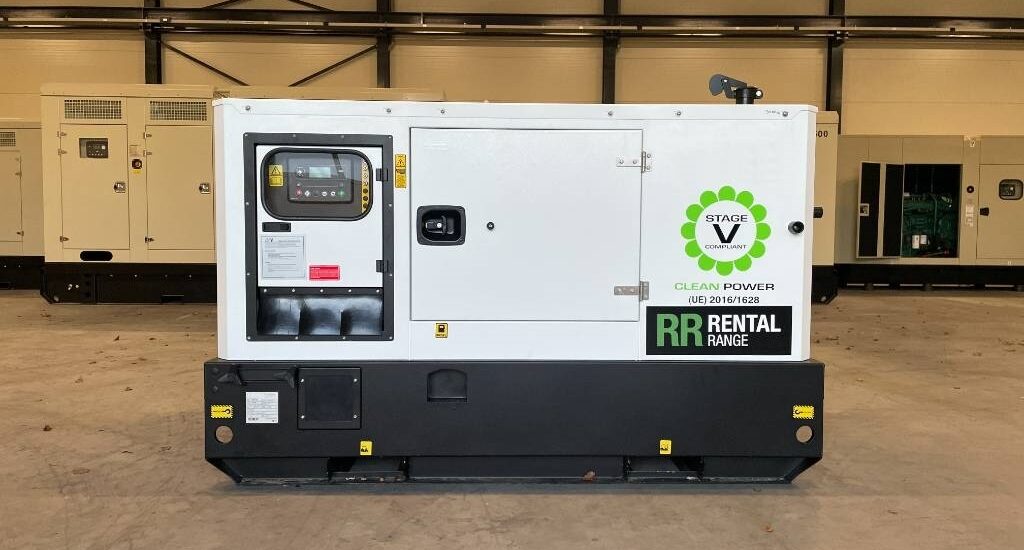
12.5kVA Generator Fuel Tank Size and Runtime Explained
Introduction
Choosing a generator is not only about getting enough electrical capacity. You also need to know how long it can run before someone has to refuel it. The 12.5kVA generator fuel tank size therefore matters just as much as the generator’s rated output, particularly for South African homes, businesses, farms and sites where uninterrupted backup power is required.
If the tank is too small you might have to fill it up during a power cut. On the hand if the tank is much bigger than needed it can cost more be heavier and require more space to install. The best choice depends on how fuel the generator uses how much power it is working with, how big the tank is and how many hours you need it to run.
This guide explains how to estimate runtime properly and what to consider before buying a 12.5kVA diesel generator.
How Big Is a 12.5kVA Generator Fuel Tank?
There is no single standard tank size for every 12.5kVA generator.
Different manufacturers and generator configurations use different tank capacities. The same 12.5kVA rating can therefore be supplied with a compact base tank, a larger integrated tank or an external bulk fuel system. For a practical example, you can review the 12.5kVA Hyundai diesel generator fuel tank specifications before comparing tank capacity, fuel consumption and expected runtime.
That is why it is risky to choose a generator simply because somebody says it has a “large tank”. You need to look at the actual tank capacity in litres and then compare that figure with the engine’s fuel consumption.
For example, a generator with a 30-litre tank and another with a 50-litre tank may both produce approximately the same electrical output, but their practical refuelling intervals will obviously differ.
When comparing a generator, ask the supplier for:
- Fuel tank capacity in litres
- Fuel consumption at 25%, 50%, 75% and 100% load where available
- Rated and standby output
- Recommended operating load
- Maximum continuous running time
- Whether the quoted tank is integrated into the generator base
- Whether an external fuel tank can be installed
How Long Will a 12.5kVA Generator Run?
The answer depends mainly on fuel capacity and fuel consumption at the actual load.
A simple calculation is:
Runtime (hours) = Usable fuel in tank (litres) ÷ Fuel consumption (litres/hour)
For example, if a generator has 40 litres of usable diesel and consumes 4 litres per hour under a particular load:
40 ÷ 4 = 10 hours
That is one example. It is not a guarantee of how every 12.5kVA generator will run. The real fuel use comes from the engine and the generator system.
This difference is important because diesel use changes a lot depending on the load. A generator that is not working hard does not use fuel the way, as a generator that is handling a heavy electrical load.
12.5kVA Generator Fuel Consumption at Different Loads
A 12.5kVA generator will normally consume less diesel at a light load than at a heavy load. However, fuel consumption does not increase in a perfectly linear way.
A useful planning approach is to consider several operating points rather than relying on one advertised fuel-consumption figure.
| Generator load | Practical fuel-use expectation |
|---|---|
| 25% load | Relatively low consumption, but poor efficiency if the generator is consistently oversized |
| 50% load | Generally a sensible operating range for many standby applications |
| 75% load | Higher fuel consumption but good utilisation of the generator |
| 100% load | Highest consumption and not ideal as a continuous operating target |
Suppose, purely for illustration, that a particular generator uses:
- 2.5 L/h at light load
- 3.2 L/h at moderate load
- 4.0 L/h at 75% load
- 5.0 L/h at full load
With a 40-litre tank, the theoretical runtime at those consumption rates would be approximately 16, 12.5, 10 and 8 hours respectively.
The figures above are illustrative only. Always use the manufacturer’s published fuel-consumption data when calculating the expected runtime of a specific generator.
Why Generator Load Has Such a Big Effect on Runtime
Two customers can own identical 12.5kVA generators and get noticeably different runtimes from the same tank.
One person might use the generator to power an office, with computers, lights, network gear and a few appliances. Another person might use it to run pumps, cooling, motors, air conditioning or other equipment that needs a lot of power to start.
The second application may consume considerably more fuel because the engine is working harder.
This is also why generator sizing should come before fuel-tank selection. Our generator sizing guide explains how to calculate your electrical requirements and choose a generator with enough capacity to handle your actual load.
A generator that is substantially oversized for the normal load can spend much of its life running lightly loaded. Conversely, a generator that is too small may be overloaded, struggle with motor starting and provide inadequate backup.
How to Calculate 12.5kVA Generator Runtime
Use this four-step method when estimating runtime.
1. Confirm the tank capacity
Find the generator’s fuel tank specification in litres.
Do not assume the tank is completely usable. A practical calculation should allow for fuel that should remain in the tank and normal operating limitations.
2. Establish your actual electrical load
Calculate the equipment you expect the generator to power during an outage.
For a small South African business, this might include:
- Computers and servers
- Lighting
- Security systems
- Internet equipment
- Refrigeration
- Selected air-conditioning units
- Pumps
- Point-of-sale equipment
A farm may have a completely different load profile, particularly where borehole pumps, irrigation equipment, cooling systems or agricultural machinery are involved.
3. Find the manufacturer’s fuel-consumption figure
Ideally, use a published figure for the expected operating load rather than relying on a generic “litres per hour” estimate.
4. Divide usable fuel by consumption
If usable fuel is 40 litres and the generator consumes 4 L/h:
40 ÷ 4 = 10 hours
That gives you a theoretical runtime. Real-world runtime can be shorter because of load fluctuations, temperature, maintenance condition and operating conditions.
Does a Bigger Fuel Tank Always Mean a Better Generator?
No.
A larger tank is useful when you genuinely need longer unattended runtime. It is not automatically an advantage.
For a home where outages are normally short, a compact integrated tank may be perfectly adequate. A farm, security installation, commercial premises or remote site may benefit from substantially greater fuel autonomy.
A larger tank can also increase the physical footprint and weight of the installation. Fuel storage must be planned safely and in accordance with applicable requirements.
The better question is:
“How many hours of autonomous operation do I actually need?”
Once you know that, the required tank capacity becomes much easier to determine.
How Much Fuel Should You Keep in a 12.5kVA Generator?
For standby applications, it is sensible to maintain enough diesel to cover the expected outage period while keeping an additional operating margin.
For example, if your business needs eight hours of backup power, designing the system around exactly eight hours of calculated runtime leaves very little room for unexpected circumstances.
You should consider:
- Longer-than-expected outages
- Increased electrical load
- Fuel consumption at higher loads
- Delays in refuelling
- Restricted site access
- Emergency operating requirements
For critical operations, discuss fuel autonomy with the generator supplier before selecting the tank.
Common Mistakes When Choosing Generator Fuel Tank Size
Choosing the tank before sizing the generator
The tank is secondary to the electrical requirement. First determine what the generator must power.
Assuming advertised runtime applies to every load
A quoted runtime is meaningless unless you know the load at which it was calculated.
Running permanently at very light load
An oversized diesel generator operating at very low load for long periods can be inefficient and may contribute to engine-related problems. Generator loading should be considered during system design.
Ignoring fuel quality and maintenance
Poor-quality diesel, blocked filters and neglected servicing can affect engine performance and reliability. For practical guidance on keeping the generator and fuel system in good operating condition, see our 12.5kVA generator maintenance guide.
Treating the tank as the only source of runtime
The generator’s engine, alternator, load profile, fuel system and control settings all affect practical operation. Tank size alone does not tell you how efficiently the generator will use its diesel.
Expert Advice: Think in Hours of Autonomy
One of the most common mistakes we see customers make is asking, “How many litres is the tank?” before deciding how many hours of backup power they actually require.
Start with the operating requirement.
A residential customer might want enough fuel for an overnight outage. A retail business may need several hours of uninterrupted operation during trading hours. A farm may need extended operation for pumps or refrigeration. A critical commercial or industrial installation may require considerably more autonomy.
Once the required runtime is established, the tank can be selected accordingly.
After helping businesses and property owners assess backup-power requirements, the practical recommendation is straightforward: do not buy a generator based on tank capacity alone. Match the tank to the expected load, required autonomy and available refuelling arrangements.
Choosing Between a 12.5kVA and Other Generator Sizes
Fuel-tank requirements can also reveal that 12.5kVA is not necessarily the right generator size.
If your calculated load is comfortably below 12.5kVA, a 7kVA generator for smaller loads may provide a more appropriately sized and economical solution. If your load regularly approaches the generator’s maximum output, moving up to the next suitable size may provide better operating headroom. In that situation, a 14kVA generator for additional load capacity may be worth comparing rather than running a 12.5kVA set close to its limit.
For larger commercial requirements, the same principle applies when comparing higher-capacity generator sets. A 22kVA generator for heavier commercial loads may be more appropriate where the site’s running load, motor-starting requirements or future expansion would put a 12.5kVA generator under unnecessary strain.
Fuel Tank Size and Generator Installation
Fuel capacity should also be considered alongside the physical installation.
A generator installation needs appropriate positioning, ventilation, exhaust arrangements, electrical connections, protection and safe access for servicing and refuelling.
For fixed installations, the electrical work should be carried out by appropriately qualified professionals and designed to meet the applicable South African electrical installation standards.
If you are planning a fixed generator installation, our generator installation guide explains the key considerations for positioning, electrical connections, ventilation, exhaust systems and safe operation.
Fuel Planning for South African Backup Power
Although South Africa’s electricity situation has improved substantially, businesses still need to plan for outages, local network faults and other interruptions rather than relying solely on a national load-shedding schedule. Checking the official Eskom load-shedding schedule can help businesses anticipate planned interruptions and make sensible decisions about their backup-power requirements.
For businesses, the sensible approach is to establish the loads that are genuinely critical and determine how many hours of fuel autonomy are required. That gives you a much more useful backup-power plan than simply buying the largest tank available.
Frequently Asked Questions
How big is a 12.5kVA generator fuel tank?
There is no tank size that fits every 12.5kVA generator. The size depends on the maker and the particular generator model. Always look at the generators technical data in litres.
How long can a 12.5kVA generator run?
The running time of a 12.5kVA generator depends on how big the fuel tank’s how much fuel the generator uses when it is working. To estimate take the number of litres and divide it by the litres that the generator uses each hour.
How much diesel does a 12.5kVA generator use per hour?
There is no diesel consumption rate that fits all 12.5kVA generators. The amount of diesel a 12.5kVA generator uses each hour depends on the engine design how load it carries and the operating conditions. For planning use the fuel consumption data supplied by the generator manufacturer.
How long will 40 litres of diesel last in a 12.5kVA generator?
If a 12.5kVA generator uses 4 litres of diesel each hour under the conditions you mentioned then 40 litres of diesel would give you about ten hours of running time. In reality the actual running time may be different.
Is a bigger generator fuel tank better?
A larger fuel tank is not always better, for a 12.5kVA generator. A bigger tank can give you fuel autonomy but it also makes the generator larger, heavier and more difficult to install. Pick the tank size that matches your operating needs.
Should I run a 12.5kVA generator at full load?
A generator should not normally be selected on the assumption that it will operate continuously at maximum output. Proper sizing provides suitable operating headroom and helps accommodate starting loads.
Can I add an external fuel tank?
Depending on the generator design and installation, an external fuel system may be possible. It should be properly engineered and installed with appropriate fuel-system safety measures.
What affects diesel generator runtime?
Load, engine efficiency, fuel quality, operating conditions, maintenance condition and tank capacity can all affect runtime.
How much fuel should I keep for an emergency?
That depends on the required backup duration. Critical sites should normally allow a practical margin rather than planning to run the generator until the tank is almost empty.
Does generator size affect fuel consumption?
Yes. A larger engine and generator can consume more fuel, particularly under higher loads. However, the right generator size is determined by the electrical load and operating requirements, not fuel consumption alone.
Conclusion
The 12.5kVA generator fuel tank size should be selected around the amount of backup time you actually need, not simply the largest tank you can fit.
Start by determining your electrical load. Then establish the expected fuel consumption at that load and calculate the required fuel autonomy. From there, you can decide whether the generator’s standard tank is sufficient or whether a different configuration is more appropriate.
For South African homes, farms, offices, shops and commercial sites, this approach avoids two expensive mistakes: buying a generator that cannot comfortably handle the load, or paying for a fuel-storage arrangement that provides little practical benefit.
If you are comparing 12.5kVA generator options and are unsure which tank capacity or generator size makes sense for your application, Power Stay Solutions can help you assess the load, runtime requirement and suitable generator configuration. You can request a generator quotation and provide your requirements so the appropriate generator can be recommended.
If you are still comparing generator sizes, you can view our diesel generator range to see the different capacity options available.