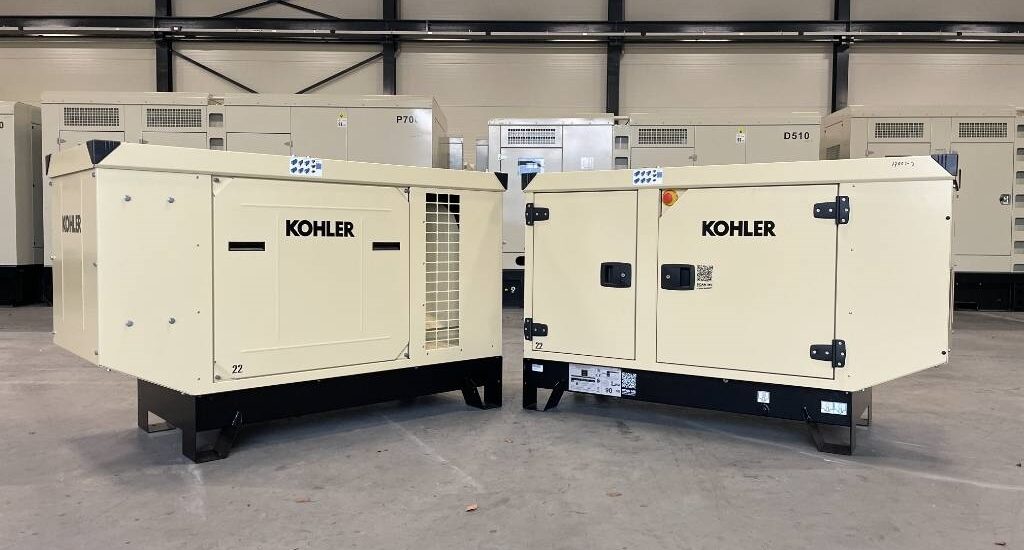
12.5kVA Single-Phase vs Three-Phase Generator: Which Do You Need?
Choosing between a 12.5kVA single-phase vs three-phase generator is not simply a matter of choosing the generator with the higher or lower specification. The phase configuration needs to match the electrical supply and the equipment you intend to run.
For a South African home, a single-phase generator may be the sensible choice. A workshop, farm, commercial property or industrial site with three-phase equipment may need a three-phase set instead. Choosing incorrectly can leave you with a generator that appears powerful enough on paper but cannot properly supply your actual loads.
This guide breaks down the differences. It shows where each type works best. It also looks at what happens when loadsre unbalanced.. It gives you practical steps to take before buying a 12.5kVA diesel generator.
What is the difference between single-phase and three-phase power?
The simplest way to understand the difference is to think about how electricity is delivered to your equipment.
A single-phase generator produces power through one alternating electrical phase. It is commonly used for conventional household and smaller commercial loads such as lighting, plugs, refrigerators, pumps and other single-phase appliances.
A three-phase generator produces three alternating phases. The phases are separated electrically and are particularly useful for larger motors, machinery, pumps, compressors and commercial or industrial equipment designed for three-phase supply.
That does not mean three-phase is automatically better. It simply serves a different type of electrical installation.
The correct question is therefore not:
“Which generator is more powerful?”
It is:
“What phase supply does my installation and equipment require?”
That distinction saves customers a surprising amount of money and frustration.
12.5kVA single-phase vs three-phase generator: the key differences
When choosing a 12.5kVA diesel generator, one of the first things to establish is whether your application requires a single-phase or three-phase supply. The correct choice depends on the electrical system at your property and the type of equipment you need to power.
| Feature | 12.5kVA Single-Phase | 12.5kVA Three-Phase |
|---|---|---|
| Typical application | Homes and smaller businesses | Commercial, agricultural and industrial applications |
| Electrical supply | Single phase | Three phase |
| Typical loads | Lights, plugs, appliances, selected pumps | Motors, machinery, pumps and three-phase equipment |
| Installation | Generally simpler | More involved |
| Load balancing | Not applicable between phases | Important |
| Motor applications | Suitable for compatible single-phase motors | Often preferable for three-phase motors |
| Best choice | Single-phase installation | Three-phase installation |
There is another point buyers often miss: 12.5kVA is not 12.5kVA available on every phase of a three-phase generator.
On a balanced three-phase generator, the total rating is shared across the three phases. At a power factor of 0.8, 12.5kVA corresponds to approximately 10kW total, and the available current per phase depends on the generator’s voltage and configuration.
So don’t compare a 12.5kVA three-phase generator with a 12.5kVA single-phase generator as though the two provide identical usable capacity to a single circuit.
When should you choose a 12.5kVA single-phase generator?
A 12.5kVA single-phase generator is generally appropriate when the property has a single-phase electrical supply and the important loads are also single-phase.
Typical applications include:
- Residential homes
- Small offices
- Shops
- Guesthouses
- Small agricultural buildings
- Security systems
- Small workshops
- Selected irrigation or water-pumping applications
For instance think about a house in Bloemfontein with a borehole pump, refrigerator, freezer, lights, Wi-Fi gear, TV, computers and a few kitchen appliances.
If all these devices work on the property’s single-phase supply and the total demand fits within the generator’s capacity a single-phase generator may be a simple and effective choice.
Do not size the generator just by counting the number of appliances. Starting current is important. Some devices draw more power at start-up than, during normal operation. This can overload a generator if not considered.
A motor-driven pump or compressor can demand considerably more current when starting than it consumes once running. This is one reason a load calculation is more useful than simply adding the wattage printed on appliances.
When is a 12.5kVA three-phase generator the better choice?
A three-phase generator becomes more appropriate when the building’s electrical installation is three-phase or when you need to operate three-phase equipment.
Common examples include:
- Workshops
- Farms
- Agricultural irrigation systems
- Commercial buildings
- Small manufacturing operations
- Borehole and pumping installations
- Refrigeration equipment
- Compressors
- Three-phase motors
- Industrial machinery
Suppose a farm has a three-phase borehole pump, workshop equipment and several smaller single-phase circuits. A three-phase generator may be the correct configuration because the main equipment requires three-phase power.
However, this is where proper sizing becomes particularly important.
A 12.5kVA three-phase generator cannot simply be treated as a 12.5kVA source available to one phase. If most of the property’s load is concentrated on one phase, the generator may become overloaded on that phase even though the total connected load appears acceptable.
That is why load balancing matters.
Can a three-phase generator run single-phase appliances?
Yes, provided the generator and installation are configured correctly and the single-phase loads are distributed appropriately across the three phases.
This is common in commercial and agricultural installations.
For example, lighting and plug circuits might be distributed across phases while a three-phase motor is connected across all three phases.
The mistake is assuming that because a three-phase generator can supply single-phase equipment, it is automatically the best choice for a single-phase property.
It isn’t.
If the entire installation is single-phase, buying a three-phase generator can introduce unnecessary complexity and may give you less usable single-phase capacity than you expected.
Can a single-phase generator run three-phase equipment?
Generally, no.
A conventional single-phase generator cannot directly supply a three-phase motor or other equipment that genuinely requires a three-phase supply.
There are specialised solutions involving variable-frequency drives, converters or other electrical equipment, but these should not be treated as a simple substitute for buying the correct generator configuration.
If your critical equipment requires three-phase power, tell your generator supplier before purchasing.
How much power does a 12.5kVA generator actually provide?
This is where the kVA rating needs some explanation.
Generators are commonly rated in kVA (kilovolt-amperes) rather than simply kW. The relationship between the two depends on power factor.
At a typical power factor of 0.8:
12.5kVA × 0.8 = 10kW
So a 12.5kVA generator may be rated around 10kW at 0.8 power factor.
That does not mean you should plan to operate continuously at the absolute maximum rating.
You need to consider:
- Running load
- Motor starting current
- Load type
- Power factor
- Generator duty
- Ambient conditions
- Future load growth
- Starting sequence
- Phase balance on three-phase systems
For a more accurate answer, use a proper generator load calculation rather than relying on a rough appliance list.
If you are unsure what capacity you need, our generator sizing guide explains how to calculate your load and choose a suitable generator size.
How to decide between single-phase and three-phase
Use this practical process before requesting a quotation.
1. Check your existing electrical supply
Look at the property’s electrical installation and distribution board.
If the property is supplied with single-phase electricity, a single-phase generator will often be the natural starting point.
If it has a three-phase supply, investigate which circuits and equipment actually require all three phases.
Do not guess from the size of the electricity meter or the physical appearance of the distribution board.
2. Identify your essential loads
Make a list of what must remain operational during a power interruption.
For a home, this might include:
- Lighting
- Refrigerator and freezer
- Security system
- Internet equipment
- Borehole pump
- Selected kitchen circuits
For a business, it could include:
- Computers and servers
- Refrigeration
- Pumps
- Production machinery
- Security systems
- Workshop equipment
You may discover that you don’t need to power the entire property.
3. Check the phase requirements of major equipment
Look at the nameplate of pumps, motors, compressors and machinery.
A specification such as 400V, 3-phase, 50Hz is a clear indication that the equipment requires three-phase supply.
A 230V, single-phase specification points towards single-phase supply.
This small check can prevent a very expensive purchasing mistake.
4. Calculate starting loads
Motors are particularly important.
A generator that can comfortably run a pump once it is operating may still struggle to start it if the generator is undersized.
Starting methods, motor size, pump characteristics and the order in which equipment starts can all affect generator selection.
5. Consider future expansion
If you are buying for a business, farm or workshop, don’t size the generator only for today’s equipment.
If another pump, freezer, machine or production line is likely to be added later, mention it during the quotation process.
Oversizing dramatically can waste money, but buying a generator with no reasonable capacity margin can be just as frustrating.
What about load balancing on a three-phase generator?
This is one of the biggest technical differences between the two options.
With a three-phase generator, the loads should be distributed reasonably across the three phases. Poor load balancing can result in one phase being heavily loaded while the others are lightly loaded, which can affect generator performance and may cause unnecessary problems during operation.
Proper phase distribution is therefore an important part of the installation process. Our generator installation guide explains the key considerations when installing and connecting a generator correctly.
Imagine a generator supplying:
- Phase 1: 4kVA
- Phase 2: 1kVA
- Phase 3: 1kVA
The total may appear to be only 6kVA, but Phase 1 is carrying a disproportionately large share.
A competent installer should assess the distribution and, where practical, move suitable single-phase circuits between phases.
This is particularly important on farms, workshops and commercial properties where several pumps, heaters, refrigeration units and other loads may operate at the same time.
Common mistakes when buying a 12.5kVA generator
Choosing the generator from kVA alone
A 12.5kVA rating doesn’t tell the whole story.
You also need to consider voltage, phase, frequency, power factor, standby/prime duty and the nature of the loads.
Assuming three-phase is automatically better
It isn’t.
If you have a single-phase home and no three-phase equipment, a three-phase generator may add complexity without giving you a meaningful advantage.
Ignoring motor starting current
This is one of the most common sizing errors.
A generator can have sufficient running capacity but still fail when a large pump or compressor starts.
Forgetting about phase balance
A three-phase generator with poorly distributed single-phase loads can experience problems even when the total calculated load appears reasonable.
Buying before checking the installation
Generator installation is not simply a matter of placing the machine outside and connecting a cable.
Changeover arrangements, protection, earthing, cable sizing, ventilation, exhaust routing and installation requirements all need proper consideration.
For electrical compliance and standards information, readers should refer to the SABS Standards resources.
Single-phase vs three-phase generator: which is cheaper?
There is no universal answer.
Generator price depends on the manufacturer, engine, alternator, enclosure, controller, fuel tank, duty rating and included equipment—not just whether the generator is single- or three-phase.
Installation costs can also differ.
A three-phase installation may require additional attention to distribution, phase balancing and the equipment being supplied.
The cheapest generator to purchase is therefore not necessarily the cheapest backup-power solution over five or ten years.
Look at the complete system cost:
Generator + installation + changeover/ATS + cabling + commissioning + maintenance + fuel + future requirements.
That gives you a much more realistic comparison.
South African considerations when choosing a generator
Generators remain relevant even as South Africa’s electricity situation changes.
Eskom reported in August 2026 that the country had recorded hundreds of consecutive days without load shedding, while work on localised load-reduction problems continues.
That doesn’t eliminate the need for backup power for businesses where an interruption can damage stock, interrupt production, stop pumps or compromise security.
For that reason, businesses should consider the consequence of power failure, not simply whether load shedding is currently occurring.
Load shedding and unexpected grid interruptions can make reliable backup power essential for homes and businesses. For the latest information on scheduled power interruptions, readers can check Eskom’s official load-shedding information. Having a correctly sized standby generator means critical equipment can continue operating when the mains supply is unavailable.
Expert advice: don’t choose the phase before checking the load
One of the most common mistakes we see customers make is starting with the generator size and working backwards.
A customer will say, “I need a 12.5kVA generator,” and only afterwards mention that the property has a three-phase borehole pump, a compressor and several single-phase circuits.
That is the wrong order.
Start with the electrical installation and critical loads, determine the phase requirement, calculate running and starting demand, and then select the generator.
A good generator quotation should be based on the actual application—not simply on the number written in a product name.
If you’re unsure, provide the supplier with your equipment list, motor ratings, existing supply details and the loads you need during an outage. That gives them something useful to work with.
Which 12.5kVA generator should you buy?
The answer is straightforward once the installation is understood.
Choose a 12.5kVA single-phase generator when:
- Your electrical supply is single-phase.
- Your essential equipment is single-phase.
- Your calculated load fits within the generator’s capacity.
- You don’t need to operate three-phase machinery.
Consider a 12.5kVA three-phase generator when:
- Your installation is three-phase.
- You have three-phase motors or machinery.
- Pumps or compressors require three-phase supply.
- Your commercial, agricultural or industrial loads need three-phase power.
- The loads can be properly balanced.
If you have confirmed that a 12.5kVA generator is suitable for your application, you can view our 12.5kVA generator for sale range and compare the available specifications.
Related generator sizes worth considering
A 12.5kVA generator is not necessarily the ideal size for every application.
If your load calculation comes in below or above this range, it makes sense to compare nearby generator capacities rather than forcing your requirements into a 12.5kVA set.
For smaller residential applications with a relatively modest electrical load, a 7kVA generator option may be enough to cover the essential appliances without paying for unnecessary capacity.
If the calculated requirement is still below 12.5kVA but you need more capacity than a smaller residential set can provide, a 9kVA generator option can be a practical middle ground.
For applications that sit slightly below the 12.5kVA range, a 10kVA generator alternative may also be worth considering, particularly where the running load is reasonably predictable.
On the other hand, if your calculated load is close to the upper limit of a 12.5kVA generator, stepping up to a 14kVA generator option can provide useful additional headroom.
Where higher starting currents or additional equipment push the requirement further, 16kVA generator capacity may be more appropriate than trying to operate a 12.5kVA unit too close to its limit.
For commercial or agricultural applications where the electrical demand is likely to grow over time, a 17kVA generator for larger loads can provide some useful room for future expansion.
The key is to select the generator that comfortably handles the actual application without paying for capacity you will never use.
Frequently asked questions
Is a 12.5kVA generator enough for a house?
It can be enough. It depends on what the house needs. A 12.5kVA generator can run everyday appliances comfortably. However high‑power items such as geysers, pumps, electric stoves, air‑conditioning units and other heavy equipment must also be counted in the calculation.
Is single-phase or three-phase better for a home?
For ordinary homes that use a single‑phase supply single‑phase is the simpler and more common choice. If the property already has a three‑phase supply or contains equipment that requires three‑phase power then a three‑phase generator might be the pick.
Can a three-phase generator power a single-phase house?
Yes it can. The installation must be set up carefully. The single‑phase loads have to be connected and the power available on the chosen phase must be considered.
Can a single-phase generator power a three-phase pump?
Not, in the way. If the pump truly needs three‑phase power you normally need a three‑phase generator or a special conversion solution.
Does a 12.5kVA generator produce 12.5kW?
Not necessarily. kVA and kW are different ratings. At a power factor of 0.8, 12.5kVA corresponds to approximately 10kW.
Do I need an ATS with a 12.5kVA generator?
Not always. An automatic transfer switch is useful when you want the generator to start and transfer the load automatically during a power interruption. Manual changeover can be suitable for some smaller applications.
Can a 12.5kVA generator run a borehole pump?
Potentially, but the pump’s running and starting requirements must be checked. A pump’s starting current can have a major effect on generator sizing.
Is a three-phase generator more expensive to run?
Not necessarily. Fuel consumption depends primarily on the engine, load, operating conditions and generator design. Phase configuration alone does not determine fuel consumption.
Should I oversize my generator?
Some capacity margin is sensible, particularly where motors start or future loads are expected. Excessive oversizing, however, can mean unnecessary capital cost and inefficient operation.
Do generators need professional installation in South Africa?
Generator installations should be properly designed and installed with appropriate changeover, protection, earthing, cabling, ventilation and exhaust arrangements. Use a suitably qualified electrical professional and follow applicable South African requirements.
Final recommendation
The decision between a 12.5kVA single-phase vs three-phase generator should start with your electrical installation, not the generator catalogue.
For a single-phase home or small business with compatible loads, a 12.5kVA single-phase generator can be a sensible backup solution. For farms, workshops and commercial or industrial sites with three-phase motors and machinery, a three-phase configuration may be the correct choice.
But don’t stop at the phase. Check the running load, starting current, voltage, power factor, load balance and future requirements before placing an order.
If you already have an equipment list, distribution-board information or details of your existing electrical supply, Power Stay Solutions can help you work through the requirements and identify an appropriate generator size and configuration. You can also compare our diesel generator range if you want to look at the available capacity options before making a decision.
If you’re ready to check your options, request a generator quotation from Power Stay Solutions with your load requirements and application details. That is a much better starting point than simply choosing the cheapest 12.5kVA generator you can find.