Best Uses for a 12.5kVA Diesel Generator in South Africa
A 12.5kVA diesel generator can be an excellent backup-power solution for a South African home, farm, office, retail shop or small business—but only if the electrical load is suitable. The mistake is assuming that 12.5kVA automatically means it can run everything on the property.
Understanding the 12.5kVA Diesel Generator uses that make sense will help you decide whether 12.5kVA Diesel Generator capacity is appropriate what equipment you can run and when it makes more sense to move up, to a larger generator.
Power interruptions remain a practical consideration for many South African businesses and property owners, which is why standby generation needs to be planned around the equipment that must remain operational. For current electricity supply and load-shedding information, readers can check Eskom load shedding information directly through Eskom’s official portal.
What is a 12.5kVA diesel generator?
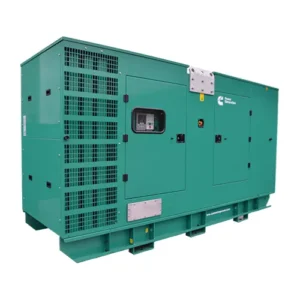
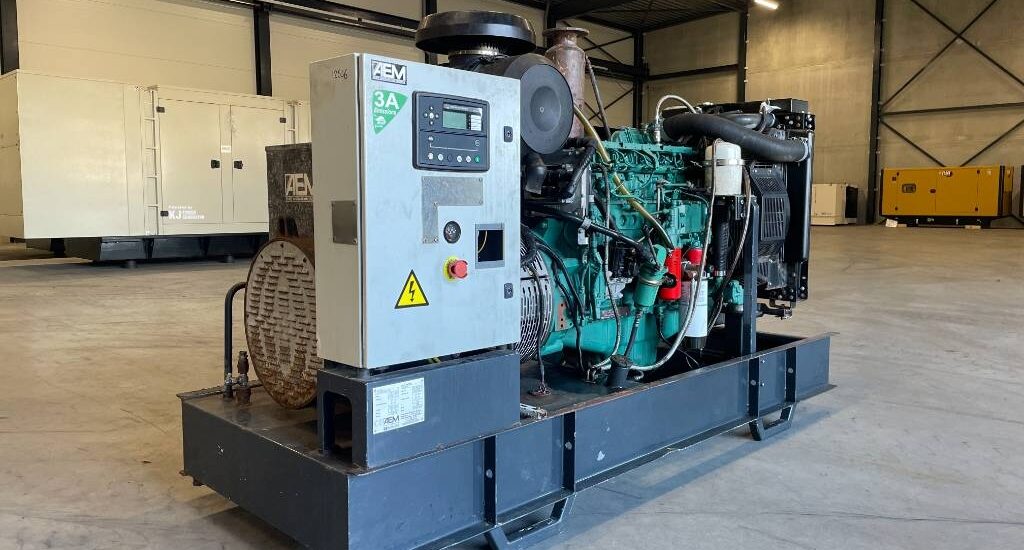
A 12.5kVA generator is a -sized backup generator made for situations that need more power than a normal small home unit but not as much as a regular commercial generator.
One key thing to know is that kVA is not the same as kW. A generator that says 12.5kVA might actually put out about 10kW depending on the details and the power factor.
For instance the Hyundai DHY12500SE is listed as 12.5kVA / 10kW with a 230V single-phase output. Hyundai also calls this model a air-cooled diesel standby generator with AVR voltage regulation and ATS compatibility.
This kind of generator is very useful, for homes and businesses that need reliable backup power instead of a big industrial power system.
Where are 12.5kVA diesel generators commonly used?
The best 12.5kVA diesel generator uses tend to fall into five broad areas:
| Application | Typical equipment that may be backed up |
|---|---|
| Homes | Lights, refrigeration, security, Wi-Fi, selected appliances |
| Offices | Computers, networking, lighting, security and selected air-conditioning |
| Retail | POS systems, refrigeration, lighting and CCTV |
| Farms | Pumps, security, lighting and selected agricultural equipment |
| Guesthouses | Refrigeration, Wi-Fi, lighting, security and essential circuits |
The key word is selected.
A 12.5kVA generator is not necessarily intended to power every appliance, machine and heating element simultaneously. The correct application depends on the actual running load and, just as importantly, the starting current of motors and compressors.
The sensible approach is to decide which circuits actually need backup power and size the generator around those loads. Our generator sizing guide explains how to assess running loads, starting requirements and the amount of capacity you should allow for future needs.
1. Backup power for homes
One of the most practical 12.5kVA diesel generator uses is residential backup power.
For a properly assessed household load, a 12.5kVA generator can provide enough capacity for essential services such as:
- Refrigerators and freezers
- Interior and exterior lighting
- Television
- Wi-Fi routers
- Computers
- Security systems
- Electric gates
- Selected air-conditioning
- Water pumps
- Selected kitchen appliances
It can be particularly useful for larger homes where a smaller generator would leave very little operating headroom.
However, don’t assume that a 12.5kVA generator will comfortably run the entire house.
Electric geysers, ovens, pool pumps, multiple air-conditioners and other high-demand appliances can quickly consume the available capacity. Motors and compressors may also require significantly more power when starting than they consume once running.
The sensible approach is to decide which circuits actually need backup power and size the generator around those loads.
2. Small offices and professional businesses
Small offices are another strong application.
A 12.5kVA diesel generator may be suitable for an office that needs to keep essential operations running during an outage, including:
- Desktop computers and laptops
- Internet routers and network equipment
- Printers
- Office lighting
- CCTV
- Alarm systems
- Access control
- Selected air-conditioning
For a business, the value of backup power isn’t simply keeping the lights on. It is protecting productivity.
A small accounting firm, engineering office, estate agency or professional practice may lose considerably more money through several hours of downtime than the cost of running a properly sized generator.
If the office uses several air-conditioners, server equipment or other substantial loads, however, the load should be assessed before assuming 12.5kVA is sufficient.
3. Retail shops and small commercial premises
Retail is another practical area for 12.5kVA diesel generator uses.
A small shop may need backup power for:
- Point-of-sale terminals
- Refrigerators and freezers
- Lighting
- CCTV
- Internet equipment
- Security systems
- Electronic doors
- Selected air-conditioning
For a food retailer, refrigeration can be particularly important. A power interruption isn’t merely an inconvenience when chilled or frozen stock is involved.
The generator does not necessarily need to power every circuit in the building. A better strategy is often to identify the critical loads and connect those circuits to the generator supply.
That can keep the generator within a sensible operating range while reducing fuel consumption and avoiding unnecessary generator capacity.
4. Farms and agricultural operations
There are several useful 12.5kVA diesel generator uses on South African farms.
Depending on the electrical demand, a unit in this range can support:
- Water pumps
- Borehole equipment
- Farm lighting
- Security systems
- Refrigeration
- Small agricultural machinery
- Workshops
- Feed-related equipment
- Communication and networking equipment
The major issue on farms is motor starting.
A pump may have a relatively modest running load but require considerably more current when starting. If several motors are expected to start at the same time, a basic kVA calculation can give a misleading answer.
For agricultural applications, tell your generator supplier exactly which motors, pumps and compressors need to start from the generator. That information can change the recommended generator size.
5. Guesthouses, lodges and small hospitality businesses
Guesthouses and smaller accommodation businesses also have a strong case for standby power.
Guests expect basic services to continue even when the grid goes down.
A correctly sized generator can potentially support:
- Lighting
- Refrigeration
- Wi-Fi
- Security systems
- Reception equipment
- Television systems
- Selected air-conditioning
- Water pumps
- Essential kitchen equipment
The aim is not necessarily to operate every room and appliance exactly as normal. Instead, the generator should keep the essential services operating without being pushed beyond its practical capacity.
This is one of the more sensible 12.5kVA diesel generator uses where automatic starting is valuable.
6. Small workshops
A 12.5kVA generator can also work for certain workshops, but this is where load assessment becomes particularly important.
Tools such as compressors, pumps, welders and other motor-driven equipment can have substantial starting demands.
A workshop that only needs lighting, a few small tools and selected equipment may be well suited to this capacity.
A workshop running several large motors simultaneously probably isn’t.
Don’t look only at the wattage printed on the equipment. Check the starting characteristics and determine which machines can realistically operate at the same time.
What can a 12.5kVA generator actually run?
There is no universal appliance list because the answer depends on the particular generator, the electrical characteristics of the equipment and what else is operating at the same time.
A useful way to think about it is:
Running load + starting load + required operating margin = generator sizing requirement
For example, a refrigerator might only consume a modest amount of power while running, but its compressor needs additional power to start. The same principle applies to pumps, air-conditioners and other motor-driven equipment.
This is why simply adding the wattage printed on appliances can produce an unreliable generator recommendation.
A proper generator sizing exercise should consider:
- Running power
- Starting current
- Motor and compressor loads
- Power factor
- Single-phase or three-phase supply
- Simultaneous loads
- Future expansion
- Required backup circuits
Is a 12.5kVA generator single-phase or three-phase?
This depends on the specific model.
For example the Hyundai DHY12500SE is a 230V single-phase generator It is therefore suited to applications designed around a single-phase supply
That does not mean every generator marketed around 12.5kVA is single-phase
If your property has three-phase equipment do not order a single-phase generator simply because the kVA number looks correct
The generators phase configuration must match the electrical requirements of the installation
If you’re unsure whether your property requires single-phase or three-phase equipment, our single-phase vs three-phase generator guide explains the practical differences and what to consider before choosing a generator.
Can a 12.5kVA generator run a business?
Yes, but the business needs to be assessed properly.
A small office, shop, guesthouse, workshop or farm operation may be able to use a 12.5kVA generator successfully if its essential loads remain within the generator’s capacity.
A larger business with substantial three-phase machinery, multiple compressors, large HVAC systems or production equipment may need considerably more capacity.
The mistake is choosing the generator from the size of the business rather than from the electrical load.
A small factory could need 100kVA. A surprisingly large office could need only 10–15kVA.
The equipment determines the generator size—not the number of employees or square metres of the building.
Does a 12.5kVA generator need an ATS?
Not always.
If somebody is available to start the generator manually during an outage, a manual changeover arrangement may be sufficient for some applications.
For businesses that require automatic backup, an Automatic Transfer Switch (ATS) can detect a mains failure, start the generator and transfer the required electrical load.
This can be particularly useful for refrigeration, security systems, servers, networking equipment and businesses that operate outside normal working hours.
The Hyundai DHY12500SE, for example, is listed as ATS compatible, but the ATS itself is not automatically included simply because the generator supports it.
Once you’ve decided on the appropriate changeover arrangement, the installation also needs to be carried out correctly, including the electrical connections, earthing and generator placement. Our professional generator installation guide explains the main requirements to consider.
What about fuel consumption?
Fuel consumption varies according to the actual load.
A generator operating at a light load will generally use less diesel per hour than one operating close to its rated capacity, but the relationship isn’t simply linear.
This matters because a generator that is consistently oversized may spend much of its operating life lightly loaded, while an undersized generator may be pushed too hard.
The better objective is to select a generator that operates comfortably within its useful load range.
The manufacturer’s published specifications should always take priority over generic online fuel-consumption claims. For the Hyundai DHY12500SE, published specifications differ between documents and configurations, which is another reason to confirm the exact machine being quoted rather than relying on a generic “12.5kVA” specification.
12.5kVA vs a larger generator: when should you move up?
A 12.5kVA generator makes sense when the calculated load fits comfortably within its usable capacity.
If the expected demand is already close to the generator’s limit, moving to the next suitable size may be the better decision.
For example, a customer whose calculated requirement is consistently close to 10kW should not deliberately buy a 10kW-rated generator and expect it to operate comfortably at that limit forever.
Allow some practical headroom.
At the same time, don’t automatically buy a much larger generator “for safety”. Oversizing increases the initial investment and can result in inefficient operation when the generator is lightly loaded.
If your calculated requirement is only slightly above the practical capacity of a 12.5kVA unit, comparing 14kVA diesel generator options may be a sensible next step before moving to a substantially larger generator.
Common mistakes when choosing a 12.5kVA generator
1. Looking only at the kVA rating
The kVA figure is only the starting point. Running load, starting current, phase and power factor all matter.
2. Assuming every 12.5kVA generator is the same
They aren’t.
Engine type, alternator, cooling system, controller, enclosure, warranty and after-sales support can vary considerably.
3. Ignoring motor starting loads
Pumps, compressors and air-conditioners can cause starting problems if the generator has not been sized correctly.
4. Forgetting about phase
A single-phase generator isn’t a universal replacement for a three-phase supply.
5. Assuming ATS is included
Always ask whether the quotation includes the ATS, installation, cabling and commissioning—or merely states that the generator is ATS compatible.
6. Buying on price alone
Compare the complete installed system, not just the generator sitting on the quotation.
7. Using a standby generator as daily prime power
A compact 3000rpm standby generator may be perfectly sensible for backup use but not the right choice for an application requiring many hours of continuous operation every day.
Expert Advice: size the system, not just the generator
One of the most common mistakes we see customers make is treating the generator as a standalone purchase.
It isn’t.
The generator, changeover equipment, electrical installation, fuel supply, ventilation, earthing and maintenance plan all form part of the backup-power system.
A 12.5kVA generator can be an excellent choice when it is correctly matched to the application. It can also be completely wrong if a customer has significant motor loads, three-phase machinery or expects to power the entire property regardless of demand.
The sensible process is straightforward: identify the loads, determine what must remain operational, assess starting requirements, confirm the phase configuration and then choose the generator.
That approach usually saves more money than trying to save money by buying the smallest machine possible.
How to choose the right generator for your application
Before requesting a quotation, prepare the following information:
1. List the equipment you need to operate.
Include pumps, compressors, air-conditioners, refrigeration and other motor-driven equipment.
2. Identify what can be switched off.
You may discover that your actual backup requirement is substantially lower than your total connected load.
3. Confirm your electrical phase.
Check whether the installation is single-phase or three-phase.
4. Identify starting loads.
Tell the supplier which motors or compressors need to start automatically.
5. Consider future requirements.
If you are expanding the business or adding machinery soon, mention it before the generator is sized.
6. Decide whether automatic backup is required.
If nobody will be available to start the generator, an ATS may be worthwhile.
7. Compare complete quotations.
Check the generator, delivery, installation, ATS, commissioning, warranty, VAT and after-sales support.
Other generator sizes worth considering
A 12.5kVA generator isn’t the only sensible option.
If your calculated demand is lower, a smaller generator may be more economical. If your demand is higher, moving up a size can provide better operating headroom. The right choice should come from the actual load assessment rather than choosing the nearest available size.
If your essential backup requirements are relatively modest—for example, lighting, refrigeration, security equipment, Wi-Fi and a few household appliances—7kVA generators for smaller backup loads may be worth considering instead of paying for unused 12.5kVA capacity.
If your requirements sit slightly above that range but remain well below 12.5kVA, 9kVA diesel generator options can provide another practical step between smaller residential generators and the 12.5kVA class.
For properties where the calculated requirement is approaching, but does not exceed, the lower end of the 12.5kVA range, 10kVA generator options for lower loads may also be worth comparing. The important thing is to leave enough operating headroom rather than sizing the generator right at its maximum capacity.
On the other hand, if your load calculation shows that 12.5kVA would be working too close to its limit, stepping up can be the better decision. 16kVA generator solutions for higher loads may provide useful additional capacity for applications with more air-conditioning, pumps, refrigeration or other equipment.
Where the expected demand is higher again, particularly in small commercial or agricultural applications, 17kVA diesel generators for larger applications provide another option before moving into substantially larger generator capacities.
For businesses, farms and workshops with significant motor loads, compressors, pumps or several pieces of equipment operating together, 22kVA generators for larger loads may be more appropriate than trying to make a 12.5kVA unit handle a demand it wasn’t designed for.
Frequently Asked Questions
What are the best 12.5kVA diesel generator uses?
Common applications for 12.5kVA diesel generator include homes, small offices, retail shops, farms, guesthouses and small workshops. 12.5KVA diesel generator still needs to be sized for the actual running and starting loads.
Can a 12.5kVA generator power a house?
12.5kVA generator can power homes, especially essential circuits. 12.5KVA generator may not be enough to run every appliance at the time. Large geysers, ovens, pool pumps and multiple air‑conditioners can quickly raise the demand.
Can a 12.5kVA generator run a small business?
Yes. Offices, shops, guesthouses and some workshops can use 12.5kVA generator effectively when their essential electrical demand is within 12.5kVA generator capacity.
What can a 12.5kVA generator run?
Depending on the 12.5kVA generator and load 12.5kVA generator may run lighting, refrigeration, computers, security equipment, Wi‑Fi selected air‑conditioning, pumps and other essential equipment.
Is 12.5kVA enough for a farm?
12.5kVA generator can be enough for smaller farms needing backup, for lighting, security, refrigeration and selected pumps. Starting requirements should be assessed carefully.
Is a 12.5kVA generator single-phase?
Some 12.5kVA generators are phase while others are three-phase. The Hyundai DHY12500SE for example is a 230V single-phase model. Always check the specifications before you buy.
Does a 12.5kVA generator need an ATS?
Only if you need starting and transfer. If you operate a backup system you may not require an ATS.
Can a 12.5kVA generator run air-conditioning?
It can power selected air‑conditioning units if the 12.5kVA generator still has capacity left. You must consider the air‑conditioner’s starting current with all other connected loads.
Can a 12.5kVA generator run a borehole pump?
It might,. The pump’s starting current is very important. A pump that draws a current when it starts could need a larger generator than its normal running wattage indicates.
Is a 12.5kVA generator suitable for daily use?
It depends on the model. How often it runs. A small 3000rpm standby generator is not the same as a heavy‑duty 1500rpm genset that is meant to run for long periods.
Should I buy a 12.5kVA or larger generator?
Pick the generator that still gives you enough capacity and a little extra room to spare. If your load is at the 12.5kVA limit going to a larger generator might be wiser, for the long run.
Final advice
The best 12.5kVA diesel generator uses are applications where the required backup load fits comfortably within the generator’s real operating capacity.
For many South African homes, farms, offices, retail businesses, guesthouses and small workshops, 12.5kVA can be a very useful middle ground. But the number on the generator should never be the only deciding factor.
Check the running load, starting current, phase configuration, required backup circuits and expected operating hours. Then compare the complete system—including installation, changeover equipment, commissioning and after-sales support.
If your assessment confirms that 12.5kVA is the right capacity, you can review the 12.5kVA Hyundai diesel generator to see the available specifications and equipment details before deciding whether it suits your application.
If you’re considering a 12.5kVA generator but aren’t certain whether it will handle your equipment, it’s better to establish that before buying rather than discover the problem during the next outage. Once the required capacity has been confirmed, you can request a generator quotation based on your specific application and delivery requirements.