
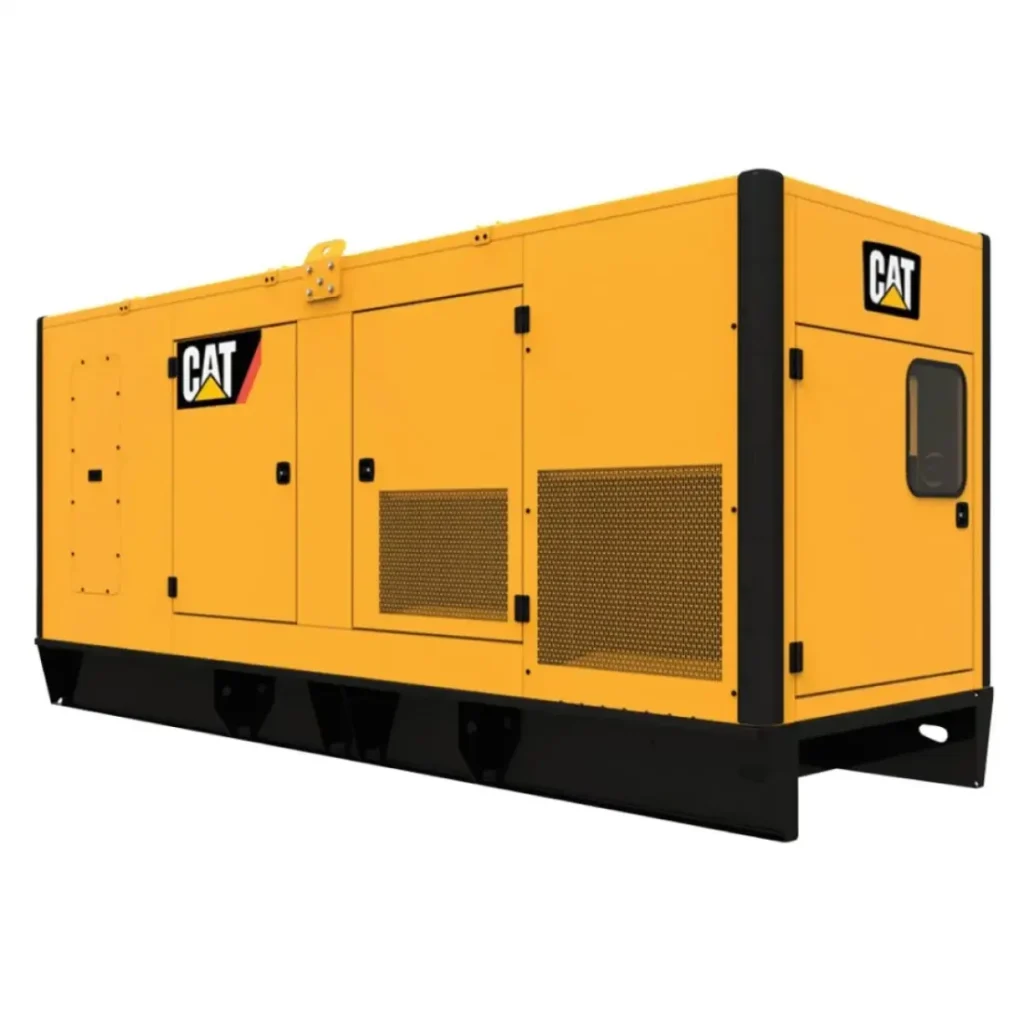
Meet the 400kVA Cat generator. Battery systems get plenty of attention, but once you need hundreds of kilowatts for hours at a time, diesel is still the practical answer. The Cat DE400E0 is built for exactly that. It runs Caterpillar’s 13-litre C13 engine, turbocharged and air-to-air aftercooled, with a Cat alternator and GCCP control panel, and Cat supports it through a strong dealer network across Africa.
This size suits shopping centres, hospitals, large office buildings, data rooms, mines and quarries, water works, and factories with a three-phase supply.
What it will run
It’s rated at 400kVA (320kW) standby and 350kVA (280kW) prime, about 93kW per phase at prime rating. That keeps a regional shopping centre open, a hospital’s essential and critical services running, or a factory producing at full output.
Built for mission-critical sites
Cat prototype-tests these sets and designs them to accept 100% of their rated load in a single step, which matters when an entire building transfers to the generator at once. The cooling system is designed for ambient temperatures up to 55°C, well above anything South Africa throws at it.
Sizing it right
For a business, don’t guess. Your electricity bill shows your maximum demand in kVA, the highest load your site actually drew during the month. Size the generator above your highest maximum demand from the last 12 months, plus room for growth and for big motors starting. For critical sites like hospitals and data rooms, ask us about parallel sets for redundancy. Send us a few bills and we’ll do the sums with you. Our sizing guide explains the method.
Fuel
Large diesel generators burn roughly a quarter of a litre of diesel per kWh produced. At a steady 250kW, budget in the region of 60 to 65 litres an hour. We give exact figures for your build on the quote.
Specifications
| Model | Cat DE400E0 |
| Phase | Three phase, 400V, 50Hz |
| Standby rating | 400kVA / 320kW |
| Prime rating | 350kVA / 280kW |
| Engine | Cat C13, 6 cylinder, 12.5 litre, turbocharged, air-to-air aftercooled |
| Engine speed | 1500rpm |
| Alternator | Cat, 12 leads, IP23, class H insulation |
| Control panel | Cat GCCP |
| Load acceptance | 100% block load in one step |
| Cooling | Rated for ambient temperatures up to 55°C |
| Fuel tank, canopy and dimensions | Confirmed with your quote; dual-wall fuel tank base optional |
Installation and commissioning
A generator this size is a proper engineering job: a designed plinth, heavy cabling to the main switchboard, exhaust and cooling airflow planning, crane access and fuel delivery access. Installation must be signed off by a registered electrician with a Certificate of Compliance. We manage the whole project, from site assessment through crane offloading, installation and load testing to handover. See our installation guide.
Part of our Cat range: see all Cat generators for sale, from 33kVA to 500kVA.
See our 400kVA generator guide for what it powers and fuel use. Looking for around 350kVA? See our 350kVA generator price guide, comparing the Pramac GSW330V and Cat DE400E0.
Comparing our biggest generators? See 400kVA vs 450kVA vs 500kVA: which is best value?
See every model on our Cat generators page.
Common questions
How does the price compare?
See our guide to the 400kVA generator price in South Africa for what drives the cost and how to compare quotes.
Can it run as a main power source?
Yes. It carries both standby and prime ratings. Size against the 350kVA prime rating for continuous running.
What sizes are nearby?
The 330kVA Pramac below it, and the 450kVA Cummins above.


