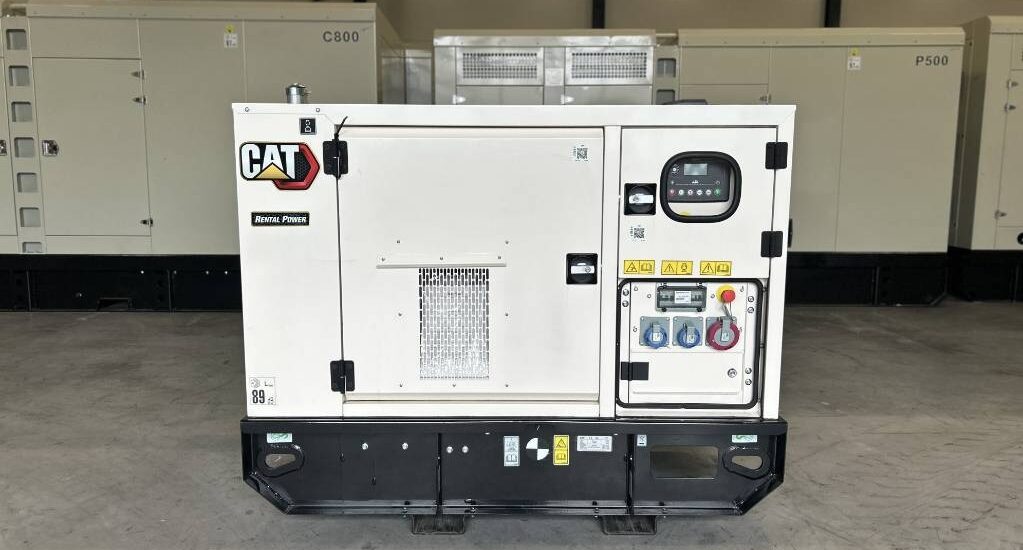
How Long Can a 12.5kVA Diesel Generator Run Continuously?
A 12.5kVA diesel generator can run for many hours, but there is no single runtime figure that applies to every installation. The actual 12.5kVA diesel generator run time depends mainly on the fuel tank capacity, electrical load, fuel consumption, operating conditions and how well the generator is maintained.
For a South African homeowner, farm, shop, office or small business, this matters because a generator that looks suitable on paper may not provide the runtime you expect once it is carrying a real load. Running a generator at 30% load is very different from running it close to its rated capacity.
This guide explains how to calculate how long the generator will run what changes how much fuel is used how long a 12.5kVA diesel generator can really work and when it might be better to choose a generator.
How long can a 12.5kVA diesel generator run?
The short answer is: as long as it has sufficient fuel and is designed, installed and maintained for the required duty cycle.
A 12.5kVA diesel generator does not have a number of hours that it can run before it needs to be turned off. The things that usually limit how long it can run are how much fuel is available the condition of the engine oil and coolant how hot it gets, what it is powering and how well it is maintained. The company that made it also says what it can handle.
For instance a 12.5kVA diesel generator that is only powering a few things during a power outage will use less fuel per hour than the same generator that is powering big equipment, pumps, refrigerators or many air conditioning units.
That is why 12.5kVA diesel generator run time should always be considered alongside the actual load.
A useful rule is:
Generator runtime = usable fuel in the tank ÷ fuel consumption per hour
If a 12.5kVA diesel generator has 50 litres of fuel and uses 5 litres per hour when it is powering certain things then it can run for about 10 hours.
This is an example. It is not true for every 12.5kVA diesel generator. To know how fuel it really uses we need to look at the technical information, for that specific 12.5kVA diesel generator and the conditions it is being used in.
What determines 12.5kVA diesel generator run time?
Several factors affect how long the generator can operate between refuelling.
1. Electrical load
Load is probably the biggest factor affecting fuel consumption.
A generator supplying lights, computers, security systems and a few appliances may be operating at a relatively light load. Add geysers, pumps, air-conditioners, refrigeration equipment or workshop machinery and fuel consumption increases.
This is why asking, “How many hours will a 12.5kVA generator run?” without specifying the load does not give you a technically useful answer.
A generator running at 50% load and one running close to full rated load can have substantially different fuel consumption.
2. Fuel tank capacity
The larger the usable fuel tank, the longer the generator can operate before refuelling.
However, tank size should not be confused with fuel consumption. Two generators with similar power ratings can have different tank capacities and therefore different 12.5kVA generator runtime.
For applications where the generator needs to operate overnight, during long outages or for extended business operations, tank capacity becomes an important part of the purchasing decision.
3. Generator efficiency
Engine design, alternator efficiency, governor operation and the overall condition of the genset all influence fuel consumption.
A properly matched and maintained generator will generally perform more predictably than one that is overloaded, poorly serviced or continually operated under unsuitable conditions.
4. Operating environment
South African conditions vary considerably.
A generator operating in a hot area, a dusty agricultural environment or a poorly ventilated enclosure may behave differently from one installed in a clean, correctly ventilated plant room.
High ambient temperatures can also affect cooling performance. Restricted airflow, blocked radiator fins and dirty filters are not minor issues when a generator is expected to operate for extended periods.
5. Maintenance condition
Oil, fuel and air filters need to be kept in good condition. Coolant levels and radiator condition also need regular attention.
Poor maintenance can increase fuel consumption, reduce performance and increase the risk of an unexpected shutdown.
For that reason, 12.5kVA diesel generator run time is not just a fuel calculation. It is also a maintenance issue.
How do you calculate 12.5kVA generator runtime?
The calculation is straightforward.
Runtime in hours = usable fuel capacity ÷ fuel consumption per hour
For example:
| Usable fuel | Fuel consumption | Approximate runtime |
|---|---|---|
| 40 litres | 4 L/h | 10 hours |
| 50 litres | 5 L/h | 10 hours |
| 60 litres | 5 L/h | 12 hours |
| 60 litres | 7 L/h | 8.6 hours |
These figures are purely illustrative. They should not be used as the expected consumption of a particular Hyundai or other 12.5kVA generator.
For a proper calculation, use the manufacturer’s fuel-consumption figures at the expected operating load.
It is also sensible not to plan your operation around completely emptying the tank. A practical fuel plan should leave an operating margin so that an unexpected extension of the outage does not leave the generator without fuel.
Does running at lower load make a 12.5kVA generator last longer?
Usually, yes, in terms of hours between refuelling.
A lower electrical load generally means lower fuel consumption per hour, so the same quantity of diesel can last longer.
But there is an important qualification: very light loading for long periods is not necessarily good for a diesel engine.
Diesel generators are designed to operate under load. Continually running a generator at a very low percentage of its rated capacity can contribute to poor combustion and exhaust-system issues, particularly over extended periods.
The solution is not to deliberately waste electricity just to increase the load. The better approach is to size the generator correctly for the application and operate it within the manufacturer’s recommended load range.
If you’re unsure what generator capacity your application actually requires, our 12.5kVA generator sizing guide explains how to assess your load before choosing a unit.
If your actual requirement is consistently much smaller than 12.5kVA, a smaller generator may be a more sensible choice.
Can a 12.5kVA generator run 24 hours continuously?
It can be possible for a suitable generator to operate for 24 hours or longer, but you should not interpret that as meaning every 12.5kVA generator can simply be left running continuously for days.
The answer depends on the generator’s duty rating, manufacturer requirements, load profile, fuel system, cooling system and maintenance schedule.
For a business that needs uninterrupted power for an extended period, the planning should include:
- Sufficient fuel storage and a safe refuelling procedure
- Correct engine oil level and service intervals
- Adequate cooling and ventilation
- Exhaust ventilation
- Routine inspection during operation
- Correct electrical loading
- Protection against overload and overheating
- A plan for scheduled servicing during prolonged operation
For critical applications, the generator installation should be designed around the required operating duty rather than simply assuming that a larger fuel tank solves everything.
What affects fuel consumption during continuous operation?
Fuel consumption changes with the electrical demand placed on the generator.
A generator supplying mainly lighting and electronic equipment may consume significantly less diesel than one running compressors, borehole pumps, refrigeration systems and air-conditioning equipment.
Starting large motors can also create substantial temporary demand. This is one reason generator sizing should consider starting current, not just the running wattage shown on equipment labels.
For businesses, farms and workshops, it is worth identifying which loads genuinely need to remain operational during an outage. Separating essential and non-essential loads can reduce fuel consumption and make a 12.5kVA generator more practical.
Is 12.5kVA enough for a business?
That depends entirely on the business.
A 12.5kVA generator can work well for some businesses but you cannot tell if it is enough just by what kind of business it is.
A small office that has computers, networking equipment, lights and some air conditioning will use a lot power than a workshop that has welders, compressors and machines.
The same thing is true for farms. A farm might have pumps, refrigerators, electric fences, lights and irrigation equipment and all those things use amounts of power.
If you calculate how power you need and it is close, to the maximum amount the generator can make it is worth thinking about getting a bigger generator so you have some extra power to spare.
What if 12.5kVA is not enough?
Don’t solve an undersized generator problem by hoping the generator will somehow cope.
If the expected load is regularly close to 12.5kVA, especially with motors or other demanding equipment, a larger unit may be more appropriate.
Depending on the calculated load, you could compare options such as:
22kVA generator — appropriate for applications with substantially higher loads. If your equipment includes several large motors or heavy commercial loads, a 22kVA generator for larger loads may provide the additional capacity required.
7kVA generator — suitable for lighter essential loads. If your calculated requirement is modest, you can compare 7kVA generator options for lighter loads before moving up to a larger unit.
9kVA generator — useful where the requirement is above a smaller residential unit but remains moderate. Reviewing 9kVA generator applications can help determine whether this size provides enough capacity for your essential loads.
10kVA generator — an option for applications sitting below the 12.5kVA range. You can also review 10kVA generator specifications if your calculated load does not justify stepping up to 12.5kVA.
14kVA generator — useful where additional operating headroom is required. If your expected load is approaching 12.5kVA, comparing a 14kVA generator for higher load capacity may provide a more comfortable operating margin.
16kVA generator — worth considering for a higher commercial load. A 16kVA diesel generator may be more appropriate where the calculated demand leaves too little headroom on a 12.5kVA unit.
17kVA generator — suitable where the calculated requirement moves beyond the smaller standby range. Looking at 17kVA generator applications can help if your business has a higher or more demanding load profile.
This approach is better than stuffing every anchor with “generator for sale”. The reader gets useful context, while the internal links still clearly communicate the subject of each destination page.
12.5kVA generator continuous operation: what should you check?
Before relying on a generator for long operating periods, check the following:
Before starting
- Confirm the oil level.
- Check coolant level.
- Inspect fuel level and fuel quality.
- Check for visible fuel, oil or coolant leaks.
- Inspect belts, hoses and connections.
- Ensure the radiator and ventilation paths are clear.
- Confirm the connected load is within the generator’s rated capacity.
During operation
Monitor:
- Engine temperature
- Oil pressure
- Generator voltage
- Frequency
- Load percentage
- Fuel level
- Unusual vibration or noise
- Exhaust colour or unusual smoke
If an alarm, warning or abnormal operating condition appears, do not simply reset the controller and carry on. Investigate the cause.
Expert Advice: don’t buy based on runtime alone
One of the most common mistakes customers make is asking for a generator based almost entirely on how many hours they want it to run.
Runtime matters, but load comes first.
A 12.5kVA generator with an appropriately sized fuel system and a sensible load can be a very effective standby solution. But if the generator is undersized, no amount of fuel will fix the underlying problem.
After helping businesses, farms and residential customers assess backup-power requirements, the better approach is always to establish the actual load first, determine which equipment must operate during an outage, consider motor starting requirements, and then select the generator and fuel arrangement.
For longer outages, the question becomes not simply “How long can it run?” but “How do we safely and reliably keep this installation powered for the required period?” Following a proper diesel generator maintenance guide is one of the simplest ways to protect reliability during extended operation.
Common mistakes that reduce generator runtime
Running unnecessary loads
Keeping non-essential geysers, pumps, air-conditioners or machinery running can dramatically increase fuel consumption.
Ignoring the load profile
Looking only at the total connected load can result in poor sizing. Starting currents and the sequence in which equipment starts also matter.
Refuelling too late
Waiting until the fuel gauge is almost empty creates unnecessary operational risk. Establish a refuelling point before the tank reaches a critical level.
Neglecting servicing
Dirty filters, poor-quality fuel, incorrect oil levels and cooling problems can affect both reliability and fuel consumption.
Installing the generator poorly
A generator needs adequate ventilation, exhaust management and access for servicing. Before commissioning the unit, review the applicable diesel generator installation requirements to make sure the installation is safe, practical and suitable for the site.
Does a 12.5kVA generator need to be switched off periodically?
Not necessarily simply because it has been operating for several hours.
The correct operating procedure depends on the generator model, duty rating and manufacturer’s maintenance requirements. Some applications are designed for standby operation, while others are specified for longer running periods.
For prolonged operation, scheduled inspections, refuelling and servicing should be planned around the manufacturer’s instructions rather than using an arbitrary “run for X hours, then switch off” rule.
If the generator is supplying critical equipment, automatic transfer switching can also help manage the transition between utility power and generator power.
Before selecting the changeover equipment, it is also worth checking the single-phase vs three-phase generator requirements for your installation, particularly if the generator will supply a mixture of residential, commercial or industrial loads.
South African considerations for generator operation
South African generator planning should take account of the local electrical installation, site conditions and applicable standards. The South African National Standards for generator installations provide a useful reference when considering the safety and technical requirements that may apply to a generator installation.
South African businesses should also consider the actual nature of their electricity supply and outage requirements when planning standby generation. For current information on electricity supply conditions and load-shedding arrangements, businesses can refer to the official Eskom electricity supply and load-shedding information, while customers supplied by municipalities should also check their municipality’s information.
It is worth remembering that South Africa’s electricity situation can change. Eskom reported a full year without load shedding in May 2026, but businesses that cannot tolerate interruptions may still require properly designed standby power because grid reliability and local supply conditions are not the only risks to consider.
Frequently Asked Questions
How many hours can a 12.5kVA diesel generator run?
The thing is, there is no one answer that works for every 12.5kVA diesel generator. The number of hours it can run really depends on a lot of things like how fuel it can hold how much fuel it uses what kind of electrical load it is handling, the conditions it is operating in its duty rating and how well it is maintained. To get an idea you should look at the fuel consumption data from the manufacturer of the 12.5kVA diesel generator.
Can a 12.5kVA generator run for 12 hours?
It is possible for a 12.5kVA diesel generator to run for 12 hours. It really depends on how much fuel it can hold and how much fuel it uses when it is running at the actual load. You need to do some math to figure out how long it can run, using the amount of fuel it can use and how fast it uses it.
Can a 12.5kVA generator run for 24 hours?
Some 12.5kVA diesel generators can run for 24 hours. Even longer if they are set up and maintained properly but you have to make sure you are following the rules set by the manufacturer for how long it can run and how to maintain it.
How much diesel does a 12.5kVA generator use per hour?
There is no one answer to this question that works for every 12.5kVA diesel generator. How fuel it uses changes depending on the load how efficient the engine is and the conditions it is operating in. You should use the numbers given by the manufacturer for how fuel it uses at the load you expect.
Does a heavier load reduce generator runtime?
Yes it does. When a 12.5kVA diesel generator has to handle an electrical load it usually uses more fuel, per hour which means it can only run for a shorter amount of time on the same amount of diesel.
Is it bad to run a diesel generator at low load?
Running at light load for extended periods can be undesirable for a diesel engine. The generator should be operated within the manufacturers recommended load range than deliberately keeping it excessively lightly loaded.
Can a 12.5kVA generator power a house overnight?
It can provided the households actual demand is within the generators capacity and the installation is correctly designed. High-demand appliances such as geysers, pumps, electric stoves and multiple air-conditioners can quickly consume capacity.
What size fuel tank does a 12.5kVA generator need?
There is no tank size. The appropriate capacity depends on the required autonomy, expected load, fuel consumption and whether the generator needs to operate through extended outages.
How do I increase 12.5kVA generator runtime?
Reduce electrical loads keep the engine properly maintained, use clean fuel ensure the cooling system works correctly and avoid operating equipment that is not needed during an outage.
Should I choose a larger generator for more runtime?
Not automatically. A larger generator does not necessarily give fuel economy if it is badly matched to the actual load. Size the generator around the electrical requirement first then choose an appropriate fuel capacity and operating arrangement.
What is the best load for a 12.5kVA generator?
There is no percentage that suits every generator. The manufacturer specifies the operating range. In general the goal is to avoid both overloading and prolonged operation at excessively light loads.
Choosing the right 12.5kVA generator for your application
If your calculated load fits comfortably within the capacity of a 12.5kVA unit, it can be a practical standby solution for a home, farm, office, shop or smaller commercial application.
For buyers comparing actual equipment, the Hyundai 12.5kVA diesel generator is a relevant product to review alongside the technical requirements of your installation.
The important thing is not to buy purely because the generator is labelled “12.5kVA”. Confirm the required running load, starting requirements, phase configuration, expected runtime, installation conditions and fuel requirements first.
If the numbers are close to the generator’s maximum output, getting professional advice before ordering is money well spent.
Conclusion
A 12.5kVA diesel generator can provide dependable backup power for many applications, but its runtime is determined by more than the size printed on the generator.
Fuel tank capacity, fuel consumption, electrical load, maintenance, ambient conditions and operating duty all affect 12.5kVA diesel generator run time. A unit carrying a light essential load may run considerably longer between refuelling than the same generator operating near full capacity.
The safest approach is to calculate your actual load, establish the required autonomy and then select the generator and fuel arrangement accordingly. If your application needs longer operating periods or has substantial starting loads, it may also make sense to compare the next generator size rather than pushing a 12.5kVA unit to its limits.
Power Stay Solutions can help you work through the load requirements and identify a generator that makes technical and financial sense for your application.
If you already know your required load, fuel autonomy and application, you can review the Hyundai 12.5kVA diesel generator or request a generator quotation from Power Stay Solutions for guidance on the appropriate configuration.