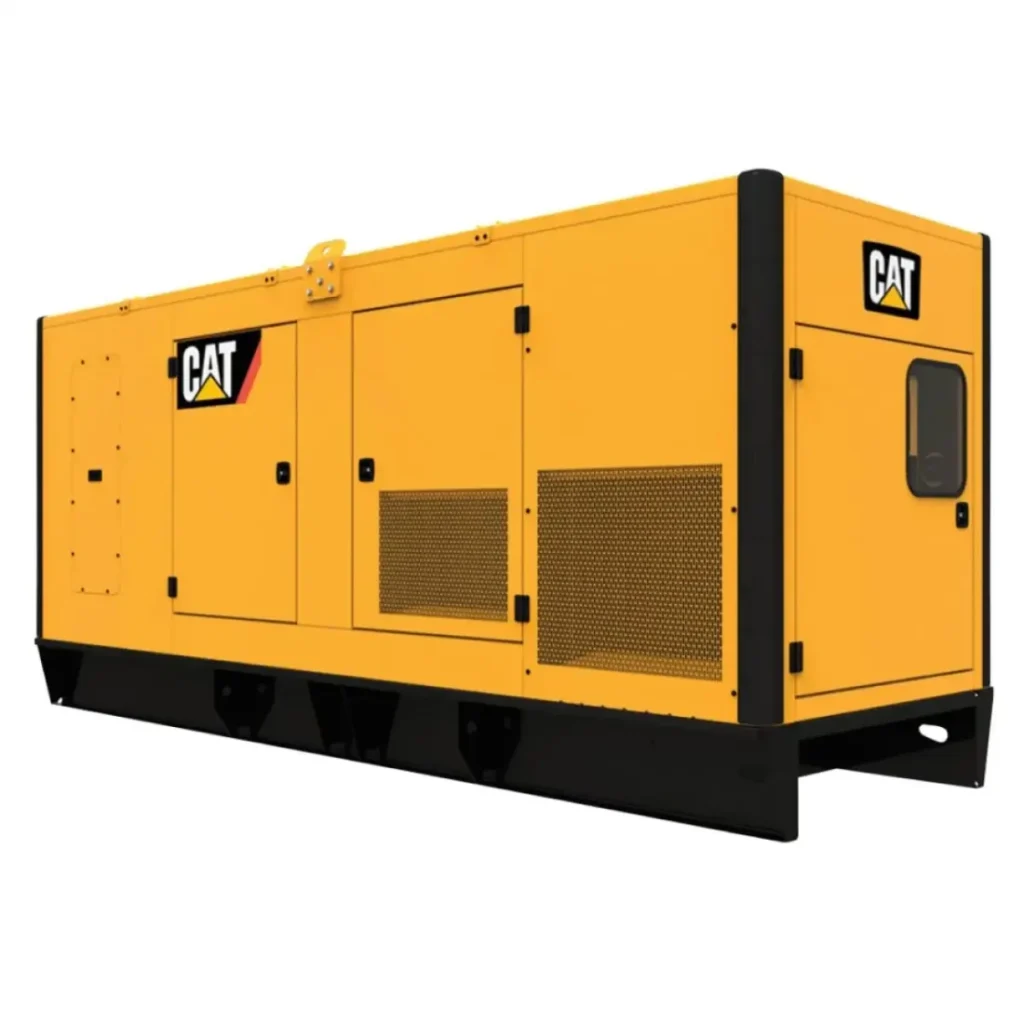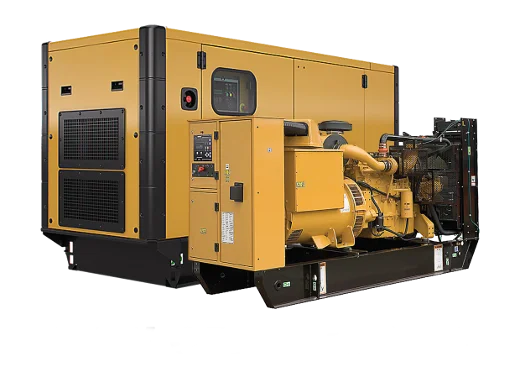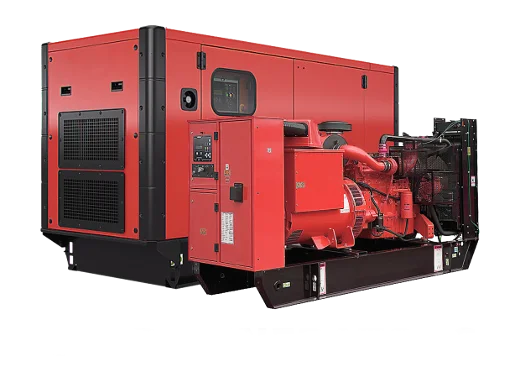
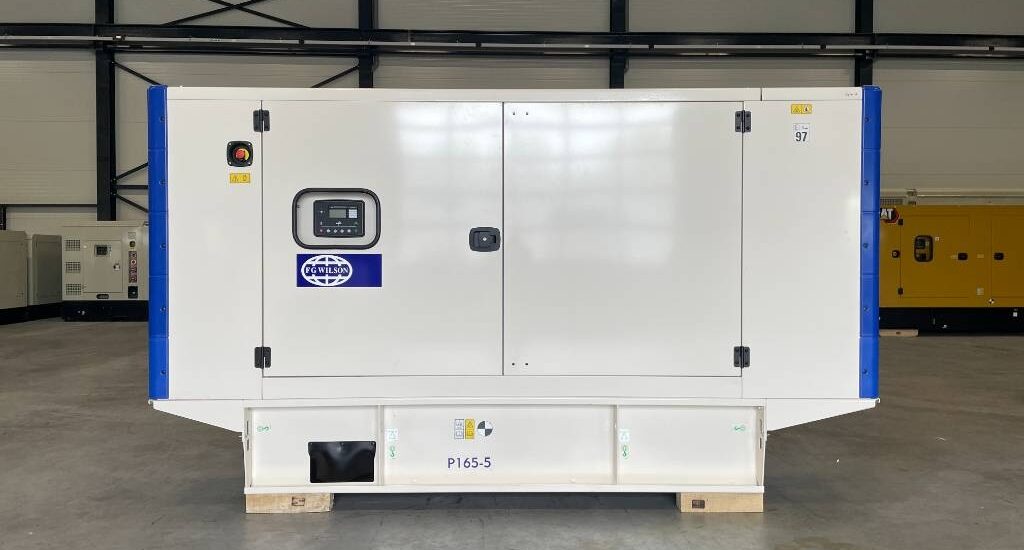
Diesel vs Petrol Generator: Why Choose Diesel for 12.5kVA Backup Power?
If you’re comparing a diesel vs petrol generator for 12.5kVA backup power, the cheapest generator to buy is not necessarily the cheapest one to own. Fuel consumption, operating hours, load profile, maintenance, engine life and the type of equipment you need to protect all matter. Before choosing the fuel type, it is worth checking your 12.5kVA generator sizing requirements so you know the capacity is appropriate for the loads you actually need to run.
For a South African home, farm, shop, office or small industrial operation, a 12.5kVA diesel generator can make a lot of sense when the generator is expected to run regularly or for extended periods. But petrol still has situations where it is the better choice.
This guide explains where diesel has the advantage, where petrol can win, and what you should actually consider before buying.
Diesel vs petrol: what is the real difference?
Both generator types perform the same basic job: an internal-combustion engine drives an alternator to produce electricity. The important differences are in how the engines operate and how well each type suits the duty you expect from it.
Petrol engines generally use spark ignition. Diesel engines use compression ignition, meaning the fuel ignites because of the heat generated by compressing air inside the cylinder.
That difference matters in practical use.
A petrol generator can be perfectly suitable for occasional short outages. It is often lighter, relatively simple and may have a lower purchase price.
A diesel generator tends to make more sense where reliability, fuel economy under load and long operating hours are priorities.
For a diesel vs petrol generator for 12.5kVA, I would therefore look at the intended duty before looking at the price tag.
Why diesel is usually the better choice at 12.5kVA
1. Diesel is better suited to regular, sustained operation
A 12.5kVA generator is no longer a small camping-style machine. It can supply meaningful loads in a home, retail premises, workshop, farm or small business.
That changes the buying decision.
If the generator is expected to run for several hours at a time, particularly at moderate to high load, diesel’s efficiency and engine characteristics become more valuable. A 12.5kVA diesel generator for standby power can therefore be a practical solution for homes, farms and small businesses that need dependable backup electricity during extended outages.
A good diesel set is designed around the idea of doing useful work for extended periods rather than simply providing a few minutes of emergency power.
This is one of the strongest arguments for diesel in a commercial environment.
2. Diesel generally offers better fuel efficiency under load
Fuel consumption depends heavily on engine design, generator loading, ambient conditions and maintenance, so there is no honest single figure that applies to every 12.5kVA generator.
However, diesel engines generally extract more useful energy from each litre of fuel than comparable petrol engines, particularly when operating at a sensible load.
That matters when your generator is running frequently.
For example, a business that operates refrigeration, pumps, security systems, computers and lighting for several hours during an outage could accumulate a substantial number of generator operating hours over a year.
A small saving in fuel consumption per hour becomes much more significant when multiplied across hundreds of hours.
Don’t make the mistake of comparing fuel prices alone. Compare fuel consumed per hour at your expected load.
3. Diesel engines are built for durability
One reason diesel remains common in agriculture, construction, mining and commercial standby applications is engine durability.
Diesel engines typically operate with robust internal components because compression ignition requires high cylinder pressures. A properly maintained diesel engine can therefore deliver a long service life when it is correctly sized and operated.
That does not mean every diesel generator automatically lasts longer than every petrol generator. Poor maintenance can destroy a good diesel engine surprisingly quickly.
Oil changes, coolant checks where applicable, air and fuel filtration, battery condition and regular testing all matter.
4. Diesel is a strong option for businesses
For a business, generator downtime has a cost beyond the fuel bill.
A power interruption can stop production, shut down point-of-sale systems, interrupt refrigeration, affect security systems or cause equipment to restart unexpectedly.
That is why businesses often favour diesel when choosing a diesel vs petrol generator for 12.5kVA backup power.
A generator that starts reliably and can comfortably operate for several hours is usually more valuable than one that was simply cheaper to purchase.
What about fuel cost?
This is where generator comparisons often become misleading.
Diesel is not automatically cheaper to buy per litre, and fuel prices in South Africa change. The more useful calculation is your generator’s cost per hour at the load you actually expect to run.
Consider a business that needs backup power for five hours during an outage. A generator consuming noticeably less fuel per hour can produce meaningful savings over repeated outages.
But there is another factor: running a generator far below its intended load is also inefficient.
If your typical demand is only 3kW and you buy a 12.5kVA machine because “bigger is better”, you’re potentially paying for capacity you rarely use. Checking your 12.5kVA generator sizing for actual loads can help you determine whether the unit is appropriately matched to your site rather than simply choosing a larger generator than necessary.
That is why proper generator sizing should come before the diesel-versus-petrol decision.
A 12.5kVA generator does not mean 12.5kW
This catches buyers out regularly.
kVA and kW are related, but they are not identical. The actual usable power depends on the generator’s power factor and the characteristics of the load.
Take Hyundais DHY12500SE for example. It is rated at 12.5kVA and 10kW with a 230V single-phase setup. That shows clearly that kVA is not the same as kW.
That’s why you should never just add up the kVA ratings of your appliances or assume a 12.5kVA generator will give you 12.5kW of continuous power.
Motors, pumps, compressors and refrigeration systems often draw higher current when starting. A generator that seems big on paper might not handle those startup surges. You could end up with a generator that stumbles or shuts down, under conditions.
Diesel vs petrol generator for 12.5kVA: quick comparison
| Factor | Diesel | Petrol |
|---|---|---|
| Purchase price | Usually higher | Usually lower |
| Fuel efficiency | Generally better under sustained load | Generally higher fuel use under comparable load |
| Long operating periods | Strong choice | Less attractive |
| Engine durability | Generally excellent | Good, but application dependent |
| Maintenance | Regular servicing essential | Regular servicing essential |
| Noise | Can be higher depending on design | Often quieter on smaller units |
| Generator weight | Usually heavier | Usually lighter |
| Commercial standby | Excellent fit | Better for lighter-duty applications |
| Occasional home use | Excellent, but may be more than needed | Can be cost-effective |
| Frequent outages | Strong choice | Can become expensive to run |
| Initial investment | Higher | Lower |
The table is a starting point, not a rule. A well-built petrol generator can outperform a badly specified diesel set.
When petrol might actually be the better choice
Diesel is not automatically the winner.
If you only need backup power for occasional short interruptions and your load is modest, a petrol generator may provide better value.
For example, a homeowner who needs to run a few lights, a television, Wi-Fi equipment and a refrigerator for short periods may not benefit enough from the additional upfront cost and weight of a diesel machine.
Petrol can also make sense where portability is important.
The calculation changes when the generator becomes a serious standby power system for a business, farm, workshop or property with critical loads.
In those applications, the advantages of diesel usually become more compelling.
What about fuel storage?
Fuel storage deserves more attention than it usually gets.
Petrol is highly volatile and must be stored in appropriate approved containers, away from ignition sources and in accordance with applicable safety requirements.
Diesel is less volatile than petrol, but it still needs proper storage. Contaminated or old diesel can cause fuel-system problems, while water contamination can create serious issues with filters and injection components.
Never treat generator fuel as something you can pour into any spare container and leave in a shed.
If you maintain a standby generator for emergency use, establish a fuel management routine rather than allowing fuel to sit indefinitely.
Don’t overlook the generator’s load profile
The most suitable generator depends on what you are actually powering.
A 12.5kVA unit might be appropriate for:
- A large home with selected essential circuits
- A small office
- A retail shop
- Security and communications equipment
- Refrigeration
- Farm pumps and selected agricultural equipment
- Workshop equipment, provided starting requirements are assessed
- Small commercial operations
It may not be appropriate for an entire property with large electric heating loads, multiple motors, electric geysers and heavy machinery operating simultaneously.
For a farm, for example, a pump starting under load can present a very different generator-sizing problem from a house running lights and computers. Understanding the 12.5kVA single-phase vs three-phase generator options is therefore particularly important if your site has pumps, workshop machinery or other three-phase equipment.
Common mistakes buyers make
Buying on purchase price alone
A cheaper petrol generator may look attractive until you calculate fuel consumption over several years.
Better approach: Compare purchase price, expected annual operating hours, fuel consumption, servicing and expected service life.
Assuming 12.5kVA means 12.5kW
It doesn’t necessarily.
Better approach: Look at the manufacturer’s rated kW output and calculate the actual load.
Ignoring starting current
A pump or compressor can demand significantly more power during startup than while running.
Better approach: Identify motors and other high-starting-current equipment before selecting the generator.
Buying too large a generator
Oversizing is not automatically safer or more economical. A generator that spends most of its life lightly loaded may not operate in its ideal range.
Better approach: Size the machine around the actual operating load, while allowing appropriate headroom for starting currents and future expansion.
Connecting a generator incorrectly
A generator should never simply be connected to a building’s electrical installation using an improvised cable or backfeed arrangement.
A correctly designed changeover or automatic transfer arrangement is required, and installation should be carried out by a competent electrical professional who understands 12.5kVA generator installation requirements.
Automatic transfer switch: worth it for standby power?
If the generator is intended to protect a business, office, server equipment, refrigeration or other critical loads, an Automatic Transfer Switch (ATS) can be extremely useful. A 12.5kVA automatic generator installation can be particularly convenient where the backup system needs to operate without someone being present to start the generator manually.
An ATS senses when the main power goes out. It then starts the generator and switches the connected loads over to the generator’s power. Once the main power comes back and stays stable the ATS switches everything back. Shuts down the generator, in a controlled way.
Not every 12.5kVA generator is configured for automatic operation, so check that the specific model supports the required two-wire start or ATS arrangement.
Maintenance matters more than the fuel label
A diesel generator is only as reliable as its maintenance programme.
For a standby generator, regular exercising is particularly important. Starting the machine periodically confirms that the battery, starter system, controller and engine are functioning before an actual outage occurs.
Maintenance should typically include:
- Engine oil and filter checks
- Fuel filter inspection and replacement
- Air filter inspection
- Battery and charging-system checks
- Coolant checks on liquid-cooled machines
- Belts, hoses and electrical connections
- Exhaust inspection
- Generator output and protection checks
- Periodic load testing where appropriate
Expert Advice
One of the most common mistakes we see customers make is treating generator selection as a simple question of “How many kVA do I need?”
The better question is: What will the generator actually be doing?
A generator for a house that runs intermittently is a different proposition from one protecting a shop with refrigeration, a farm with pumps or a business where every hour without electricity costs money.
After helping customers assess backup-power requirements across South Africa, the practical recommendation is straightforward: if your 12.5kVA generator will operate regularly, carry meaningful loads and provide serious standby protection, diesel is usually the stronger long-term choice.
If usage is very light and occasional, petrol deserves a proper comparison.
There is no prize for buying the most expensive generator. The right machine is the one whose capacity, fuel system, engine design and control arrangement match the job.
What should you check before buying a 12.5kVA diesel generator?
Use this checklist before requesting a quotation:
- Confirm the total running load in kW.
- Identify motors, pumps and compressors.
- Check starting-current requirements.
- Confirm single-phase or three-phase supply.
- Decide which circuits actually require backup.
- Estimate annual generator operating hours.
- Compare expected fuel consumption.
- Check fuel-tank capacity and expected runtime.
- Confirm whether ATS operation is required.
- Check noise and installation requirements.
- Confirm warranty and local parts/service support.
- Make sure the installation and changeover arrangement will be compliant.
South African electrical installations also need to be designed and carried out with the applicable South African electrical installation standards for generators in mind. SANS 10142-1 covers the wiring of low-voltage installations, so your generator connection, changeover equipment and associated electrical work should be assessed by a suitably qualified professional.
What size generator should you consider instead of 12.5kVA?
Don’t become attached to 12.5kVA simply because it is the subject of this article.
If your calculated load is smaller, 7kVA diesel generators for lighter backup loads may be more economical, while 9kVA backup generators for smaller properties can suit homes and small businesses with a higher but still relatively modest demand.
If your load is close to the practical limit of a 12.5kVA machine or includes large starting loads, stepping up to 14kVA generators for additional load capacity may be the more sensible option. Where the site has several motors or other substantial loads, 16kVA generators for higher-demand applications may provide useful additional headroom.
For larger commercial requirements, you may need to consider 17kVA generators for larger standby loads, 22kVA generators for commercial applications or an even larger set, depending on the calculated demand.
Frequently Asked Questions
Is diesel better than petrol for a 12.5kVA generator?
For extended standby use diesel is the better choice because diesel is more fuel efficient lasts longer and works well for long periods. Petrol may be a choice only for occasional or light use.
Is a 12.5kVA diesel generator enough for a house?
A 12.5kVA diesel generator can be enough for a house. The answer depends completely on the household load. A 12.5kVA unit should not be expected to power all appliances at the same time unless a proper load assessment has been done.
Is diesel cheaper to run than petrol?
Diesel usually uses fuel to produce the same useful output especially when the load is sustained.. The real running cost depends on fuel prices, generator efficiency, load and operating hours.
Is diesel more reliable than petrol?
A well‑maintained diesel generator is very suitable, for demanding applications. Reliability ultimately depends on the engine, generator set, installation, maintenance and operating conditions.
Can a 12.5kVA generator run a borehole pump?
Possibly but the pump’s starting current must be checked. The running wattage alone is not enough to decide whether a 12.5kVA generator can start and run the pump reliably.
Can a 12.5kVA diesel generator run a business?
Yes if the diesel generator is sized correctly for the load of the business. Shops, offices, workshops and small commercial premises can use a 12.5kVA diesel generator for selected or essential circuits.
Should I buy a diesel generator if I only use it during occasional outages?
Not necessarily. If the diesel generator will run a few hours each year and portability and initial cost are important petrol may offer better value. If reliability and longer runtime are priorities diesel may still be preferable.
How long can a 12.5kVA diesel generator run?
Runtime depends on the capacity, engine efficiency and electrical load. A diesel generator operating at a load will generally consume more fuel per hour than a diesel generator carrying a light load.
Does a 12.5kVA generator need an ATS?
No. An ATS is not mandatory for every installation. It is useful when automatic changeover is required, for unattended standby applications and critical loads.
Can I connect a generator directly to my house?
Do not improvise a connection. A diesel generator needs a designed changeover arrangement to prevent dangerous backfeeding and to ensure the installation operates safely.
What is the best fuel for a commercial standby generator?
For commercial standby applications diesel is the preferred option because the diesel generator is expected to operate reliably for longer periods and often, under substantial load.
Diesel vs petrol generator for 12.5kVA: the bottom line
The best choice depends on how you intend to use the machine.
Choose diesel when you expect regular operation, longer outages, substantial loads, commercial use or demanding standby duties. Its higher upfront cost can make sense when fuel efficiency, durability and dependable operation matter over the life of the generator.
Consider petrol when the generator will be used infrequently, portability and initial purchase price are important, and the electrical load is relatively modest.
Most importantly, don’t choose the fuel type before establishing the load. A correctly sized petrol generator will serve you better than an incorrectly sized diesel generator.
If your requirement is around 12.5kVA, Power Stay Solutions can assess the application, confirm whether that capacity is appropriate and recommend a generator based on the actual load rather than simply selling you the largest unit available.
If you’d like to understand more about the company behind the recommendation, you can learn about Power Stay Solutions generator supply experience and the markets we serve. You can then request a 12.5kVA generator quotation based on your load if you would like a recommendation and pricing for your application.