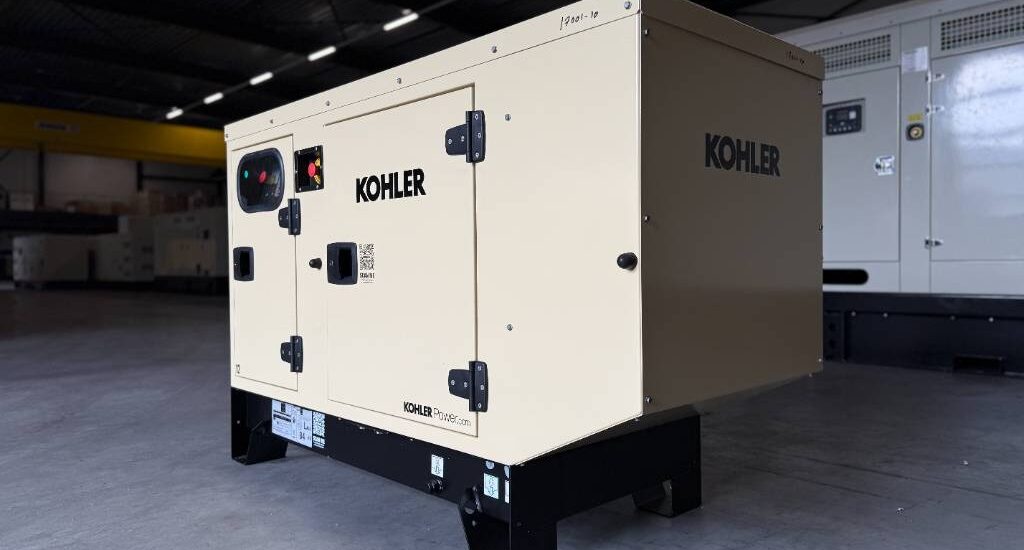
How Much Fuel Does a 12.5kVA Diesel Generator Use?
The amount of fuel a 12.5kVA diesel generator uses can be very different. It depends on how electricity it is producing how well the engine works, the design of the generator and the conditions it is being used in. If the generator is not working hard it might only use a few litres of fuel per hour.. If it is working really hard it will use a lot more fuel.
For businesses in South Africa, understanding 12.5kVA diesel generator fuel consumption is useful for budgeting diesel, estimating backup-power costs and deciding whether a 12.5kVA generator is actually the right size. In this guide, we explain realistic consumption, how load affects fuel usage, what it costs to run and what to check before buying.
How much diesel does a 12.5kVA generator use per hour?
There is no one number that works for every 12.5kVA generator.
As a real-world estimate, a diesel generator, in this size range might use around:
| Generator Load | Typical Fuel Consumption Range* |
|---|---|
| 25% load | 1.5–2.0 litres/hour |
| 50% load | 2.0–2.8 litres/hour |
| 75% load | 2.8–3.5 litres/hour |
| 100% load | 3.5–4.5+ litres/hour |
*These are estimated ranges, not numbers from the manufacturer. The real amount of fuel used depends on the engine the alternator, the generator setup, the weather, the fuel quality and how much power is needed.
Therefore, if someone asks us, “How much diesel does a 12.5kVA generator use?”, the honest answer is: it depends on how hard the generator is working.
A generator that provides 4kVA all the time will not use the amount of fuel as one that provides 10kVA.
To make sure you are making the right choices when buying and running the generator always look at the fuel consumption numbers from the manufacturer, for specific levels of power use.
What affects 12.5kVA diesel generator fuel consumption?
The biggest factor is load.
A generator does not simply burn the same amount of diesel every hour. As electrical demand increases, the engine has to produce more mechanical power, increasing fuel consumption.
1. Electrical load
Suppose your business has a 12.5kVA generator but normally operates at only 30–40% load. The engine is producing considerably less power than it would at 75% or 100% load.
This is why looking only at the generator’s maximum rating can give you a misleading idea of running costs. Before choosing a generator, you should calculate your normal running load and starting requirements using a generator sizing guide for South Africa.
2. Engine efficiency
Two generators with similar kVA ratings can have different fuel consumption because their engines, injection systems, alternators and control systems differ.
A reputable manufacturer should provide fuel-consumption data at different load levels.
3. Generator condition
Poor maintenance can increase fuel consumption.
Blocked air filters, dirty fuel filters, injector problems, poor-quality diesel and incorrect engine servicing can all affect combustion and engine performance.
4. Load type
Not all electrical loads behave in the same way.
Motors, pumps, compressors, refrigeration equipment and other inductive loads can create high starting demands. A generator may therefore need more capacity than the normal running load suggests.
This is one reason generator sizing should be based on both running and starting requirements.
5. Operating environment
High temperatures, altitude, dust and poor ventilation can affect generator performance.
South African businesses operating in hot or dusty environments should pay particular attention to cooling, airflow and maintenance. If you are installing a generator permanently, our diesel generator installation guide explains the key installation considerations you should address before putting the generator into service.
Fuel consumption at 50%, 75% and 100% load
Looking at fuel usage by load percentage is one of the easiest ways to understand generator running costs.
Imagine a 12.5kVA generator with a manufacturer-rated fuel consumption of approximately 2.5 litres per hour at 50% load and 4 litres per hour at full load.
If the generator operates for eight hours:
At 50% load:
2.5 litres × 8 hours = 20 litres
At full load:
4 litres × 8 hours = 32 litres
That is a difference of approximately 12 litres of diesel over an eight-hour operating period.
The figures above are an illustration rather than a specification for a particular generator. Always use the actual manufacturer’s data when calculating operating costs.
Why running a generator lightly loaded can also be a problem
It is tempting to think that operating a large generator at a very low load is always the most economical option because it burns less fuel per hour.
That is incomplete.
Diesel engines generally perform best when operated within an appropriate load range. Extended periods of very light loading can contribute to incomplete combustion, carbon deposits and other engine problems.
If your normal load is consistently much lower than the generator’s capacity, it may be worth reassessing the generator size rather than simply accepting the inefficiency.
This is where a proper generator sizing assessment becomes useful.
How much does it cost to run a 12.5kVA diesel generator?
Fuel consumption tells you how many litres you use. Your actual operating cost depends on the price you pay for diesel.
The calculation is straightforward:
Hourly fuel cost = litres consumed per hour × diesel price per litre
For example, if a generator consumes 3 litres per hour and diesel costs R25 per litre:
3 × R25 = R75 per hour
Running for 10 hours would use:
3 × 10 = 30 litres
And the fuel cost would be:
30 × R25 = R750
These numbers are examples only because diesel prices change.
Your complete generator operating cost may also include:
- Engine oil and filters
- Routine servicing
- Replacement filters
- Battery maintenance or replacement
- Repairs
- Generator technician call-outs
- Periodic testing
- Fuel storage and handling
- Installation and electrical equipment
For a business, calculating only diesel costs can therefore underestimate the true cost of standby power. For businesses planning generator capacity around electricity interruptions, understanding South Africa’s electricity supply can help when deciding how much backup capacity and fuel to keep available.
How much diesel do you need for an 8-hour power outage?
This depends on the actual load and the generator’s measured consumption.
For example, if your generator averages 3 litres per hour:
3 litres × 8 hours = 24 litres
For 12 hours:
3 × 12 = 36 litres
For 24 hours:
3 × 24 = 72 litres
A sensible fuel plan should also account for the possibility that the outage lasts longer than expected.
For businesses such as shops, farms, workshops, offices, restaurants and small manufacturing facilities having fuel, for the expected outage period is only part of the planning process. You also need to think about fuel storage and how the generator will be refuelled during long periods of use.
Is a 12.5kVA generator enough for a business?
That depends entirely on what the business is powering.
A 12.5kVA generator can be suitable for smaller commercial operations, offices, retail premises, workshops, farms and other applications with a moderate electrical load. For applications with a lower electrical demand, a 9kVA diesel generator may provide sufficient capacity without paying for a larger generator than necessary.
But kVA alone does not tell you whether the generator is suitable.
You need to identify:
- Lighting
- Computers and networking equipment
- Refrigeration
- Air conditioners
- Pumps
- Motors
- Compressors
- Security systems
- Production equipment
- Office equipment
- Other essential loads
Starting current is particularly important for motors and compressors.
A business might calculate that its equipment normally uses 8kVA and assume a 10kVA generator is sufficient. That can be a mistake if a large motor starts while other equipment is already running. If your calculated demand is approaching the practical limit of a 12.5kVA unit, a 14kVA diesel generator may provide a more appropriate operating margin.
If you are comparing generator sizes, it can be useful to examine alternatives such as 9kVA, 14kVA or 16kVA generators rather than automatically buying the smallest unit that appears to cover the running load.
12.5kVA generator vs a larger generator: which is more economical?
Bigger is not automatically better.
A 25kVA diesel generator provides considerably more capacity, but if your actual demand is only 5–7kVA, you may be paying for capacity you rarely use.. If your calculated load is significantly lower, a 7kVA diesel generator may be a more appropriate option for a smaller application.
On the other hand, buying a generator that is too small can cause overloads, nuisance shutdowns, poor starting performance and unnecessary stress on the engine and alternator. If your business has a higher starting load or expects moderate expansion, a 16kVA diesel generator may be worth considering instead of operating a 12.5kVA unit close to its limit.
It is to select a generator that matches your actual running load, starting requirements and expected future demand. If you are still comparing generator sizes, you can browse our diesel generators for sale in South Africa to compare available options across different kVA ratings and applications.
For customers unsure of their requirements, comparing several generator sizes is usually more useful than focusing exclusively on fuel consumption.
What is the most fuel-efficient way to operate a 12.5kVA generator?
There are several practical ways to control diesel usage without compromising reliability.
Avoid unnecessary loads
During an outage, switch off equipment that does not need to operate.
There is little reason to run non-essential lighting, air conditioning or equipment if the generator is supplying critical loads only.
Keep the generator properly maintained
Follow the manufacturer’s service intervals and use the correct filters, lubricants and replacement parts.
A neglected diesel engine is rarely an economical engine. For a practical maintenance schedule covering servicing, filters, fluids, batteries and routine inspections, see our diesel generator maintenance guide.
Don’t oversize the generator unnecessarily
If the generator spends most of its life operating at a very low load, review whether the selected capacity is appropriate.
Monitor actual fuel usage
For businesses, record:
- Generator running hours
- Diesel added
- Approximate electrical load
- Maintenance performed
This gives you a much better picture of actual 12.5kVA diesel generator fuel consumption than relying on estimates alone.
Keep the generator installation in good condition
Poor ventilation, restricted airflow or unsuitable installation conditions can affect performance.
If your generator is permanently installed, have the installation checked by a suitably qualified professional.
Common mistakes customers make when estimating generator fuel consumption
Assuming the kVA rating determines fuel usage
It doesn’t.
A 12.5kVA generator operating at 40% load will consume less fuel than the same generator operating close to full load.
Using one fuel figure for every situation
A statement such as “this generator uses 3 litres per hour” is incomplete unless the load at which that figure was measured is provided.
Ignoring starting loads
A generator may appear large enough based on normal running consumption but struggle when motors, pumps or compressors start. Generator selection and installation should also take account of the applicable South African electrical standards, particularly where the generator is being connected to a building’s electrical system.
Buying based only on advertised fuel economy
Fuel consumption matters, but so do engine quality, alternator quality, service support, parts availability, warranty and installation.
Running a generator unnecessarily
If the generator is operating during an outage, there is no reason to power equipment that can safely remain switched off.
Expert Advice: Don’t buy a generator based on litres per hour alone
One of the most common mistakes we see customers make is comparing generators almost entirely on advertised fuel consumption.
That is the wrong way to make the decision.
A generator that uses slightly less diesel but is poorly matched to your load can become an expensive purchase. Starting problems, overloads, frequent servicing and downtime can cost far more than the diesel saved.
After helping businesses assess backup-power requirements, the better approach is to look at the complete picture: load, starting requirements, expected operating hours, generator quality, installation, maintenance and fuel consumption.
If a 12.5kVA generator is being considered for a business, don’t simply ask, “How many litres per hour does it use?”
Ask:
“How much diesel will it use for my actual load, and is this the correct generator size for my application?”
That is a much more useful question.
What should you check before buying a 12.5kVA diesel generator?
Before requesting a quotation, have the following information available:
- Your normal running load
- Largest motor or compressor
- Single-phase or three-phase requirements
- Required backup duration
- Whether the generator will run automatically
- Whether an ATS is required
- Installation location
- Available ventilation
- Expected future electrical demand
- Required fuel-tank capacity
- Required noise level
- Service and maintenance requirements
If you are replacing an existing generator, previous fuel consumption and operating records can also be useful.
Frequently Asked Questions
How many litres per hour does a 12.5kVA diesel generator use?
A 12.5kVA diesel generator uses about 1.5 to 4.5 litres of fuel per hour. This depends on how load it has and how the generator is designed. To get an answer you should look at the fuel consumption data from the manufacturer of the 12.5kVA diesel generator.
How much fuel does a 12.5kVA generator use at 50% load?
A typical 12.5kVA generator uses around 2 to 2.8 litres of fuel per hour when it is working at 50 percent load.. The actual amount of fuel it uses can be different for different engines and models of the 12.5kVA generator.
How much diesel does a 12.5kVA generator use at full load?
A 12.5kVA generator uses about 3.5 to 4.5 litres of diesel fuel per hour when it is working at load. You should always check the specifications of the 12.5kVA generator from the manufacturer before you plan how fuel you will need.
How much fuel does a generator use in 8 hours?
If a 12.5kVA generator uses an average of 3 litres of fuel per hour then it will use 24 litres of fuel in 8 hours.. The actual amount of fuel it uses depends on the load it has.
Is a 12.5kVA generator economical?
A 12.5kVA generator can be a choice for saving money if you choose the right size for what you need. The 12.5kVA generator will be economical if it is the size, for the normal and starting loads of your application. The fuel economy of the 12.5kVA generator also depends on how the engine works and how well you maintain the 12.5kVA generator.
Can a 12.5kVA generator run a house?
Yes it can run a house. This depends on what the house needs in terms of electricity. We need to check what the house is using and make sure the generator can handle it.
If you are choosing a generator specifically for residential backup, our generator for home backup power guide explains how to assess your home’s requirements and choose an appropriate generator.
Can a 12.5kVA generator run a three-phase business?
It can,. We have to set it up correctly for the businesss electrical system. We also need to check what the business is using and make sure the generator is the size.
Does a bigger generator use more diesel?
Usually a bigger generator uses diesel when it is running at full power.. It does not always use more diesel. If a smaller generator is working hard it can use more diesel than a bigger one that is not working as hard.
Is it bad to run a diesel generator at low load?
Yes it is not good to run a diesel generator at a low load for a long time. This can cause problems with the engine. Make it dirty. We should get a generator that’s the right size for what we need.
How can I reduce 12.5kVA generator fuel consumption?
Reduce unnecessary loads, maintain the engine properly, avoid prolonged very-low-load operation and make sure the generator is correctly sized. Monitoring actual litres used against operating hours is also useful.
Should I choose a 12.5kVA or 14kVA generator?
The correct choice depends on your calculated running load, starting loads, required reserve capacity and future expansion. If your demand is close to the 12.5kVA unit’s practical limit, stepping up to a 14kVA generator may provide a more appropriate operating margin.
Conclusion
12.5kVA diesel generator fuel consumption is not a fixed number. The generator’s load, engine, alternator, condition, operating environment and application all influence how much diesel it uses.
For planning purposes, a 12.5kVA generator may consume roughly 1.5 to 4.5 litres per hour, depending heavily on load. But these figures should never replace the manufacturer’s tested fuel-consumption data for the specific model you are considering.
For a South African business, the better buying decision is not simply to find the generator with the lowest advertised litres-per-hour figure. The generator should be correctly sized, capable of handling starting loads, properly installed and supported by reliable maintenance and service.
If you are unsure whether 12.5kVA is sufficient for your application, compare your actual electrical requirements before committing to a generator or learn how to size a generator correctly before comparing specific kVA models.
If you already know your load requirements and want to compare available options, browse the relevant diesel generator range or request a generator quotation from Power Stay Solutions. This allows you to discuss your load, expected running hours and application before choosing the most suitable generator.