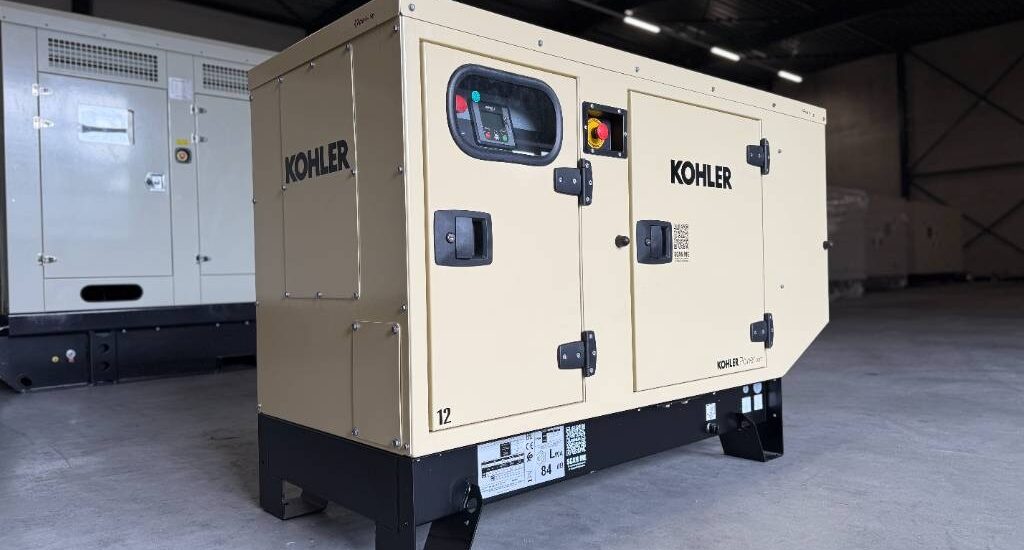
12.5kVA vs 10kVA Generator: Which One Is Right for You?
Choosing between a 10kVA and 12.5kVA generator can look like a small decision, but that extra capacity can make a real difference when your loads start together or your power requirements increase. A 12.5kVA vs 10kVA generator comparison is therefore less about buying the bigger machine and more about matching the generator to the actual electrical load.
For homes in South Africa for farms for shops, for offices and for businesses the correct option depends on the running load the needs for starting motors plans, for future growth the type of electrical phase, fuel use and how the generator will be used. Here is how to make the choice.
10kVA vs 12.5kVA generator: what is the actual difference?
The basic difference is generating capacity.
A 10kVA generator is designed to supply up to approximately 10kVA of apparent power, while a 12.5kVA generator provides approximately 25% more capacity.
That does not mean a 12.5kVA generator will automatically use 25% more diesel or cost 25% more to operate. Fuel consumption depends heavily on the actual load placed on the engine, the generator’s design and how efficiently it operates at that load.
A useful way to think about the comparison is this:
| Factor | 10kVA Generator | 12.5kVA Generator |
|---|---|---|
| Rated apparent power | 10kVA | 12.5kVA |
| Approx. capacity increase | — | 25% more than 10kVA |
| Best suited to | Smaller loads | Larger or growing loads |
| Starting headroom | More limited | Better |
| Future expansion | Limited | Better allowance |
| Purchase cost | Generally lower | Generally higher |
| Physical size | Usually smaller | Usually larger |
The important point is that kVA is not the same as kW. Generator sizing must consider both, along with power factor and the type of equipment being supplied.
How much power does a 10kVA generator provide?
At a typical power factor of 0.8, a 10kVA generator corresponds to approximately 8kW of active power.
That does not mean you should deliberately run an 8kW generator continuously at its absolute limit.
A practical installation needs operating headroom. Refrigerators, pumps, air-conditioners, compressors and other motors can also draw considerably more current when starting than they do once running.
For example, a small business might have:
- Lighting
- Computers and monitors
- Routers and networking equipment
- Security systems
- Refrigeration
- A few plug-in appliances
- One small pump or air-conditioner
A 10kVA generator may handle this type of application comfortably if the calculated maximum demand and starting currents remain within its capabilities. If your calculated load is comfortably within this range, a 10kVA diesel generator can provide a practical backup solution without paying for capacity you do not need.
But if several larger loads operate simultaneously, the margin can disappear quickly.
What does a 12.5kVA generator offer?
A 12.5kVA generator provides roughly 10kW at a 0.8 power factor, giving you more usable capacity than a typical 10kVA set.
That extra 2.5kVA can be valuable when you need additional operating headroom for equipment starting simultaneously or when your power requirements are expected to increase. A 12.5kVA diesel generator can be a sensible option for these applications.
It can provide additional headroom for equipment starting simultaneously, reduce the temptation to operate the generator constantly at its limit and give a business some room for moderate future expansion.
For example, a farm may have a borehole pump, security equipment, lighting, refrigeration and workshop equipment. The calculated running load might appear acceptable for a 10kVA generator, but the pump starting current could change the picture.
This is one reason experienced generator suppliers do not size a machine simply by adding up the wattage printed on appliances.
12.5kVA vs 10kVA generator: which is better for a house?
There is no universal answer.
For a modest South African home with essential circuits only, a 10kVA generator may be more than adequate. However, if the calculated load is significantly lower, a 7kVA diesel generator may provide a more appropriately sized backup solution.
For a larger house with several air-conditioners, borehole equipment, electric pumps, refrigeration, security systems, electric cooking equipment and other heavy loads, 12.5kVA may be the more sensible choice. Conversely, if your essential load falls comfortably below 10kVA, a 9kVA backup generator may be a better fit than paying for unnecessary capacity.
The mistake is trying to power everything simply because the generator is available.
A better approach is to decide which circuits actually need backup power. A generator sizing guide can help you work through these loads and determine how much capacity your home actually requires.
For example, you might prioritise:
- Lights
- Refrigerator and freezer
- Security system
- Internet and networking
- Borehole or water pump
- Selected plug circuits
- Essential air-conditioning
Large electric geysers, ovens, pool heaters and other high-demand appliances can significantly increase the required generator size.
What about businesses, farms and commercial properties?
For commercial users, reliability and starting capacity become even more important.
A small retail business might need refrigeration, point-of-sale equipment, lighting, security systems and air-conditioning. A farm may have pumps, electric fencing, irrigation controls, refrigeration and workshop equipment. An office could have computers, servers, networking equipment, lighting and air-conditioning.
A 10kVA generator may be appropriate where the calculated demand is comfortably within its capacity.
A 12.5kVA generator starts making more sense when the load is approaching the upper end of a 10kVA unit or when additional starting headroom is needed.
For a business, I would rather see a properly sized 12.5kVA generator operating comfortably than a 10kVA generator being pushed to its limit every time several machines start. A diesel generator sizing guide for businesses can help you assess running loads, starting requirements and future demand before choosing the generator.
That said, oversizing also has drawbacks. A generator that is substantially larger than the actual load can operate inefficiently, particularly if it spends long periods at very light load.
The objective is correct sizing, not simply buying the biggest generator within budget.
Does a 12.5kVA generator use more diesel than a 10kVA generator?
Potentially, but the answer is not as simple as comparing the generator sizes.
Fuel consumption is primarily affected by the engine, generator design, operating load, speed, maintenance and application.
A 12.5kVA generator operating at a moderate load can sometimes use less fuel than a smaller generator being pushed hard, while the actual figures vary considerably between models.
This is why manufacturers normally publish fuel consumption at different load levels.
For example, the Hyundai DHY12500SE 12.5kVA generator specification provided for Power Stay Solutions indicates a 50-litre fuel tank, with stated runtime of approximately 12 hours at 100% load and 20 hours at 50% load. Actual performance will vary with operating conditions.
If fuel costs are a major concern, don’t compare only the advertised kVA rating. Ask for the manufacturer’s fuel consumption figures at the load you realistically expect to run.
What about motor starting loads?
This is where many generator-sizing calculations go wrong.
Motors can draw substantially higher current during startup than during normal operation. Pumps, compressors, refrigeration systems, air-conditioners and certain workshop machines can therefore create a short but significant demand spike.
A generator that appears large enough based on running watts alone may struggle when a motor starts.
If you are comparing a 12.5kVA vs 10kVA generator, this additional headroom is one of the strongest reasons to consider the 12.5kVA option.
However, simply adding 2.5kVA does not guarantee that every motor will start successfully. The generator’s alternator, engine response, voltage regulation and starting characteristics also matter.
For larger motors, soft starters, variable-speed drives or staged starting may need to be considered.
Single-phase or three-phase: don’t overlook this
Before choosing between 10kVA and 12.5kVA, confirm whether your installation is single-phase or three-phase.
A generator’s total kVA rating does not automatically tell you how much power is available on every individual phase.
This matters particularly for farms, workshops, commercial properties and industrial installations where three-phase equipment is common.
A generator may have sufficient total capacity but still be unsuitable if the loads are badly unbalanced or the phase requirements do not match the installation.
If you are unsure which configuration your property or equipment requires, our single-phase vs three-phase generators guide explains the key differences and helps you determine which option is appropriate.
Which generator should you choose?
A practical rule is:
Choose 10kVA when:
- Your calculated maximum demand is comfortably within its capacity.
- Your essential loads are relatively modest.
- Large motors are not starting simultaneously.
- You have little expected load growth.
- Keeping the initial purchase cost down is important.
Choose 12.5kVA when:
- Your load is approaching the practical limit of a 10kVA set.
- You have pumps, compressors or other motor loads.
- Several important loads may operate together.
- You expect moderate future expansion.
- You want additional operating headroom.
If the calculated requirement is already close to 12.5kVA, however, don’t assume 12.5kVA is automatically the answer. The next appropriate generator size may be more suitable.
That is where a proper load assessment becomes worthwhile.
Common mistakes buyers make
Buying according to appliance wattage alone
Nameplate ratings are useful, but they don’t tell the whole story. Starting currents and power factor can affect generator performance.
Running the generator at maximum capacity
A generator should not be selected with the assumption that it must operate permanently at its maximum rating.
Ignoring future expansion
A business that is currently comfortable on 10kVA may need additional capacity after adding refrigeration, machinery or air-conditioning.
Oversizing unnecessarily
Going much larger than required can increase capital cost and create inefficient light-load operation.
Forgetting installation requirements
The generator itself is only part of the system. Changeover equipment, cabling, protection, earthing, ventilation, exhaust arrangements and installation location all need proper consideration.
Expert advice: don’t size the generator from one number
One of the most common mistakes we see customers make is choosing a generator based solely on the largest appliance they own or the total wattage written on a list.
Generator sizing is more nuanced than that.
After helping businesses, farms and property owners assess backup power requirements, the same issue comes up repeatedly: the customer knows what equipment needs to run, but hasn’t considered what starts first, what runs simultaneously and what can be switched off during an outage.
A good sizing assessment should consider the running load, starting load, power factor, phase configuration, essential versus non-essential circuits and expected future demand.
It should also consider how the generator will actually be operated.
If you are uncertain between a 10kVA and 12.5kVA generator, spending a little time getting the load calculation right is considerably cheaper than buying the wrong generator and discovering the problem during an outage.
Installation and South African compliance
Generator installation should be treated as an electrical installation, not simply a matter of placing a diesel machine outside and connecting a cable.
Changeover equipment must prevent unsafe back-feeding into the utility supply, while cabling, protection, earthing, ventilation and the installation environment must be properly assessed. Because these requirements need to be considered together, professional generator installation is recommended to ensure the generator, changeover equipment and electrical protection are correctly specified and installed.
The South African Bureau of Standards develops and maintains South African National Standards, including standards relevant to electrical installations and equipment. Readers who want to verify the applicable requirements can refer to the South African National Standards for electrical and technical compliance.
For businesses using generators as part of their backup strategy, it is also useful to understand the status of the national electricity supply and local supply arrangements. Businesses can check Eskom load shedding information and schedules when planning their backup power requirements.
Maintenance matters as much as generator size
A generator that’s the right size still requires good maintenance.
Diesel generators need to be taken care of following the manufacturers maintenance plan. Special care should be given to engine oil, filters, coolant, batteries, belts, fuel quality and the electrical system.
For generators testing on a regular basis is very important. A machine that has not been used for months may not be ready to handle an important load even if it starts up. For a practical maintenance schedule covering servicing, inspections and regular generator testing, see our diesel generator maintenance guide.
12.5kVA vs 10kVA generator: final verdict
The better generator is not necessarily the larger one.
If your properly calculated essential load fits comfortably within 10kVA and you have limited starting demand or future expansion, a 10kVA generator can be a sensible and economical choice.
If your requirements are closer to the upper end of 10kVA, you have significant motor starting loads or you want additional capacity for moderate growth, a 12.5kVA generator provides a useful safety margin.
The key is to avoid buying on kVA alone. Look at the actual equipment, starting currents, phase requirements, expected load and operating conditions.
For larger requirements, it may also make more sense to move beyond both sizes rather than stretching a small generator beyond its practical capability. If your calculated demand is above 12.5kVA, stepping up to a 14kVA diesel generator may provide the additional capacity needed without pushing a smaller generator beyond its practical limits.
Power Stay Solutions can help you work through your load requirements and identify the generator size that makes technical and financial sense for your application. If you’re comparing different generator sizes, you can also review the available 7kVA, 9kVA, 14kVA, 16kVA, 17kVA, 20kVA, 22kVA, 25kVA and 28kVA generator options before requesting a quotation.
Frequently Asked Questions
Is 12.5kVA better than 10kVA?
No, not always. A 12.5kVA generator gives you about 25 percent power but you have to think about what you really need to run and start.
Can a 10kVA generator power a house?
Yes you can use a 10kVA generator for a house. You have to be careful. You need to make sure you are not using much power. Some things like appliances might have to be turned off.
Can a 12.5kVA generator run a house?
Yes it can. A 12.5kVA generator is a choice for many homes especially if you need to use a lot of things at the same time.. You have to think about how much power you really need.
Does a 12.5kVA generator use more fuel?
Sometimes it does,. It depends on how much power you are using and what kind of generator you have. If you have a generator and you are not using it too much it might actually be better than a small one that is working really hard.
Is 10kVA enough for a small business?
It might be. If you do not need much power a 10kVA generator could be okay, for a small business.. You have to make sure you are not using too much power and that you can start everything you need to.
Is 12.5kVA enough for a farm?
It depends heavily on the farm’s equipment. Pumps, irrigation systems, refrigeration and workshop machinery can significantly affect the required capacity.
What is the difference between kVA and kW?
kVA represents apparent power, while kW represents active power. The relationship depends on power factor. Generator sizing therefore needs more than a simple wattage calculation.
Should I buy a bigger generator for future expansion?
A reasonable amount of spare capacity can be useful, particularly for businesses expecting additional equipment. However, excessive oversizing is not automatically better.
Can a generator run an air-conditioner?
Yes, provided the generator is correctly sized. The starting characteristics of the air-conditioner should be considered, particularly when multiple units may start simultaneously.
Do I need an automatic transfer switch?
If you want the generator to start automatically when utility power fails, an automatic transfer switch (ATS) is generally part of the required system. Manual changeover is another option where automatic operation is unnecessary.
Should I choose single-phase or three-phase?
Choose according to the electrical installation and equipment being supplied. Three-phase machinery generally requires a generator and installation designed for three-phase operation.
What if neither 10kVA nor 12.5kVA is large enough?
Do not overload a generator simply because it is already purchased. If your calculated demand is above these sizes, consider the next suitable generator capacity based on the complete load assessment.
Conclusion
The choice between a 12.5kVA vs 10kVA generator should come down to your actual electrical requirements, not simply the price difference between two machines.
A 10kVA generator can be an excellent solution for a modest, well-controlled backup load. A 12.5kVA unit gives you additional capacity and useful headroom where loads are higher, motors are involved or some future expansion is expected.
For either option, the smartest first step is a proper load assessment.
Power Stay Solutions can help you work through your load requirements and identify the generator size that makes technical and financial sense for your application. If you are unsure which generator size is appropriate for your home, farm, shop, office or industrial application, you can request a generator quotation and our team can help you identify a suitable diesel generator.