
Diesel vs Petrol Generator: Which Is Better for South African Homes?
Diesel vs petrol generator: which should you buy? If you need backup power for regular or long outages, buy diesel. If you want something small and portable for the odd short outage, a camping trip or a few power tools, petrol is fine. That’s really the whole answer. The rest of this article explains why, so you can see which camp you fall into.
Diesel vs petrol at a glance
| Diesel | Petrol | |
|---|---|---|
| Price to buy | Higher | Lower |
| Fuel used for the same work | Noticeably less | More |
| Engine life | Many thousands of hours, especially 1500rpm water-cooled sets | Far shorter, especially small 3000rpm engines |
| Storing fuel at home | Much safer, hard to ignite | Highly flammable, gives off vapour |
| How long the fuel keeps | Months, if kept clean and dry | Goes stale in weeks to a few months |
| Sizes available | From about 5kVA to 500kVA and beyond | Mostly small, portable units |
| Portability | Heavy, usually stays in one place | Light and easy to move |
| Best for | Homes and businesses with regular outages | Occasional, short, portable use |
Why diesel costs less to run
In South Africa, diesel and petrol cost roughly the same per litre, so what matters is how many litres each burns. A diesel engine gets more work out of every litre, so for the same load it simply uses less. On an occasional outage the difference is small. When the power goes off twice a week for hours at a time, it adds up to real money over a year. Our 10kVA fuel consumption guide shows what a diesel home generator actually uses.
Why diesel lasts so much longer
Most small petrol generators have air-cooled engines that spin at 3000rpm. They’re built to be light and cheap, and they wear out accordingly. A standby diesel, especially a water-cooled one running at 1500rpm, turns at half the speed and runs cooler, so it handles long hours year after year. If you’re running a generator every week, the petrol unit may need replacing long before the diesel even needs a major service. That’s why the cheaper machine often turns out to be the expensive one.
Keeping fuel at home: diesel is far safer

Petrol is volatile. It gives off flammable vapour at normal temperatures, and a spark near an open container can start a fire. Diesel is much harder to ignite, which makes keeping 20 or 50 litres on the property far less risky. Petrol also goes stale quickly, sometimes within weeks, and stale petrol is one of the main reasons small generators won’t start when you need them. Diesel keeps for months if it’s stored clean, dry and sealed.
Whatever you store, keep it in a proper fuel container, away from the house and any flame, and never run either type of generator indoors or in a closed garage. Both produce carbon monoxide.
When petrol is the right choice
Petrol makes sense when you need a small amount of power occasionally, or you need to carry it around: a few hours of lights and a fridge a couple of times a year, camping, a stall at a market, or running power tools on a building site. Small petrol inverter generators are also very quiet and give clean power for laptops and phones. Our article on inverter generators covers when they make sense.
When diesel is the only sensible choice
Choose diesel if outages are regular, if they last for hours, if you want the generator wired into your house with a changeover switch, if you need more than about 7 to 8kVA, or if it’s for a business. It’s also the better choice if you’d rather not keep petrol on the property. That covers most homes and every business we deal with, which is why every generator we sell is diesel.
But isn’t diesel expensive to buy?
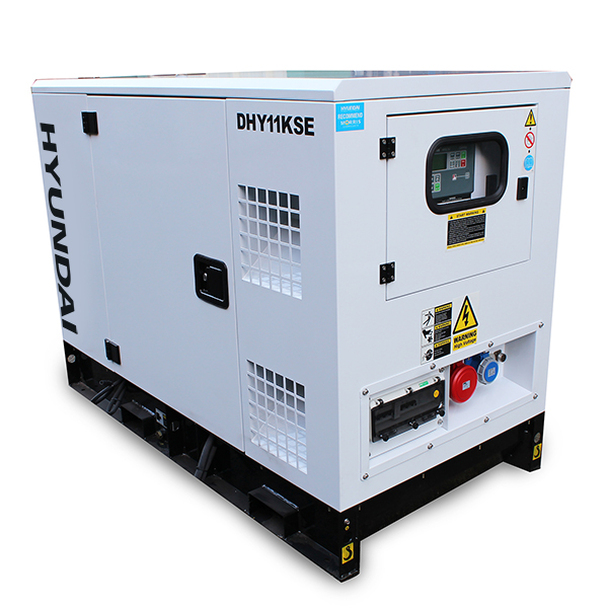
It costs more upfront, but less than many people expect. Our smallest diesel, the 7.25kVA Hyundai, is R18,500 excl. VAT (R21,275 incl. VAT), and it covers a small home’s essentials with a quiet canopy and electric start. Spread over the years a diesel lasts, with lower running costs and far fewer replacements, it’s usually the cheaper option overall. For a typical family home, the 10kVA is the size most people choose.
Not sure what size you need? Our sizing guide helps you work it out, and our guide to the best backup generator for your home compares the sizes. Or send us a list of what you want to run and we’ll recommend a size honestly. Get a quote here.
Questions people ask
Is a diesel generator better than petrol for load shedding?
Yes. Regular, scheduled outages are exactly where diesel’s lower running costs, longer life and safer fuel make the biggest difference.
Are diesel generators louder than petrol?
Not necessarily. A canopied diesel running at 1500rpm is often quieter than an open-frame petrol unit at 3000rpm. Small petrol inverter generators are the quietest of all, but they’re also the smallest.
Can I connect a petrol generator to my house?
Any generator connected to your wiring must go through a changeover switch fitted by a registered electrician, with a Certificate of Compliance. See our article on installation requirements.
How long does a diesel generator last?
With regular servicing, a good standby diesel lasts many years. Our maintenance guide explains how to keep it that way.